
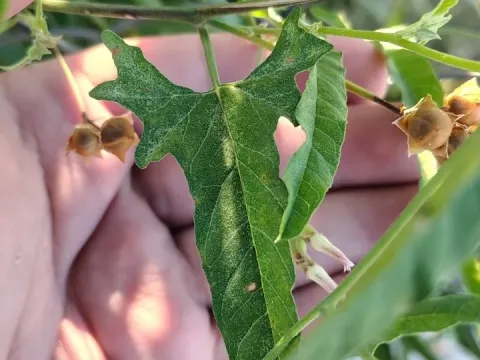
Convolvulus crenatifolius
Convolvulus crenatifolius
Convolvulus crenatifolius is a perennial herbaceous plant belonging to the Convolvulaceae family. It is characterized by its trailing or climbing stems and a complex underground network of rhizomes.
What the section contains
Convolvulus crenatifolius
The plant is native to South America, particularly common in the landscapes of Argentina. It has adapted to a variety of disturbed environments, demonstrating significant resilience in diverse habitats.
Regarding climate, the plant thrives in areas with sufficient solar radiation. Its ability to tolerate periods of limited water availability is attributed to its deep root system, which accesses moisture in deeper soil horizons.
Soil requirements are relatively moderate; however, the plant prefers well-aerated, loamy, or sandy soils where the root system can penetrate easily. It is sensitive to waterlogged conditions, which can inhibit its growth.
Effective management in agricultural settings requires consistent cultivation practices, as the plant's ability to regenerate from fragmented root segments necessitates thorough soil inversion and preventive measures.
Convolvulus crenatifolius serves as a host for several fungal diseases, including powdery mildew and various rust species that can affect the foliage and reduce overall plant vigor.
Insect pests, such as leaf beetles (Chrysomelidae), often graze on the leaves, leading to significant defoliation during the peak summer months.
Root-knot nematodes can compromise the underground structures, affecting the plant's nutrient uptake efficiency and overall long-term survival.
Virus vectors like aphids are frequently observed on the species, which may lead to the transmission of necrotic diseases that weaken the plant structure.
Integrated pest management strategies focusing on cultural practices, such as optimizing field hygiene and crop rotation, remain the most effective methods for controlling its population density.