
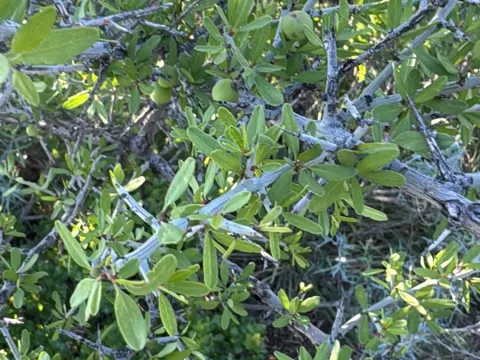
Condalia obtusifolia
Condalia obtusifolia
Condalia obtusifolia is a resilient shrub belonging to the Rhamnaceae family. Native to the arid regions of North America, particularly in the southwestern United States and Mexico, it is well-adapted to harsh desert environments.
What the section contains
Condalia obtusifolia
The plant thrives in full sun and requires well-drained, sandy, or rocky soil to flourish. It possesses remarkable drought tolerance, making it an ideal species for xeriscaping and reclamation projects in arid climates.
Regarding climatic needs, this species demands long, hot summers to complete its growth cycle effectively. It can withstand significant temperature fluctuations but is sensitive to prolonged waterlogging in the root zone.
Botanically, it is characterized by its dense, rigid branches that terminate in sharp, defensive spines. Its small, leathery leaves are an evolutionary adaptation designed to minimize water loss through transpiration in extreme heat.
In agricultural and landscaping contexts, it is highly valued for creating impenetrable living fences. Its structure provides excellent soil stabilization and serves as a natural habitat for various desert wildlife.
Common pests affecting the shrub include aphids and spider mites, which typically colonize the tender foliage during the early stages of the growing season. Early detection is key to managing these populations.
Diseases are generally rare for this species, but root rot can occur if the plant is subjected to poor soil drainage or excessive irrigation. Maintaining appropriate moisture levels is essential to prevent these fungal issues.
Fungal leaf spots may manifest if the shrub is planted in areas with poor air circulation or high humidity levels. Pruning to ensure adequate spacing is an effective cultural practice to mitigate this risk.
Biological controls are preferred over chemical pesticides due to the shrub's natural hardiness. If severe infestations occur, targeted application of soft soaps or horticultural oils is usually sufficient for control.
Overall, the plant maintains a robust health profile when grown in its natural habitat. By selecting proper sites and avoiding over-watering, growers can maintain healthy specimens for many years.