
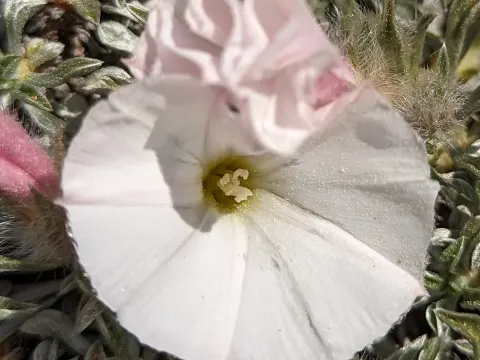
Convolvulus boissieri
Convolvulus boissieri
Sowing seeds of Convolvulus boissieri is best performed in the spring when the soil temperature is stable. Cold stratification is often recommended to break seed dormancy and increase the germination rate significantly.
What the section contains
Convolvulus boissieri
If starting seeds indoors, use well-draining trays with a sandy substrate. Ensure the seedlings are kept in a bright, cool place to prevent etiolation before they are hardened off for outdoor planting.
Direct outdoor sowing requires a weed-free environment and a thin layer of grit to prevent the seeds from washing away during heavy spring rains.
Spacing should be managed to ensure each plant has enough room to expand, as Convolvulus boissieri tends to form dense, low-growing mounds over several seasons.
Always avoid burying the seeds too deeply; a light dusting of substrate is sufficient for successful germination, as the seeds need a small amount of light to trigger growth.
Convolvulus boissieri is a hardy perennial belonging to the Convolvulaceae family. Native to mountainous and rocky regions, it has adapted to thrive in harsh environments where other plants struggle.
This species demands excellent drainage; it is perfectly suited for rock gardens, crevice plantings, or alpine troughs. The soil should be gritty and lean, as excessive organic matter can cause the plant to grow leggy and weak.
Sunlight is the most critical factor for this plant. It requires full sun exposure for at least six to eight hours a day to maintain its compact, cushion-like growth habit and promote prolific flowering.
Agronomic care is minimal once the plant is established. It is highly drought-tolerant, meaning it requires very little supplemental water once its root system has penetrated deeply into the rocky substrate.
- Thrives in poor, stony soils
- Excellent drought resistance
- Needs full sun exposure
- Low maintenance requirements
- Cold-hardy in suitable temperate zones
Root rot is the primary threat to Convolvulus boissieri, usually caused by poor drainage or heavy, waterlogged clay soils. Ensuring a deep layer of gravel or sand under the planting site is essential for survival.
Powdery mildew can occasionally affect the foliage during periods of stagnant, humid weather. Improved air circulation around the plants is the most effective preventative measure.
Pests such as aphids or spider mites may occasionally infest the foliage, particularly if the plant is stressed by extreme heat or lack of water during the mid-summer season.
In outdoor settings, snails and slugs can cause physical damage to the soft new growth. Using physical barriers or organic pest control methods can mitigate this risk effectively.
Care must be taken when using fertilizers; excessive nitrogen encourages soft, succulent growth that is more susceptible to both pest attacks and winter damage in colder regions.