
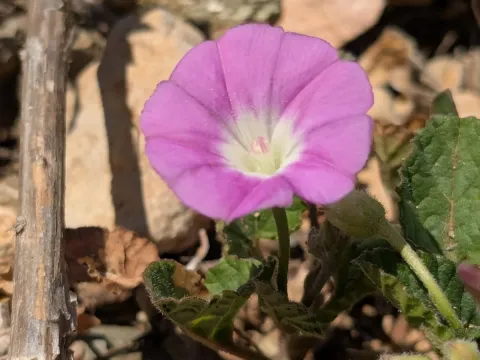
Convolvulus coelesyriacus
Convolvulus coelesyriacus
Convolvulus coelesyriacus is an herbaceous flowering plant belonging to the Convolvulaceae family. Native to the Middle East, specifically the region of Coelesyria, this plant is well-adapted to Mediterranean and semi-arid environments.
What the section contains
Convolvulus coelesyriacus
Botanically, it exhibits the typical traits of the genus, featuring slender, flexible stems and simple foliage. The presence of fine hairs on the leaves acts as a physiological adaptation, reducing water loss through transpiration in harsh, sunny climates.
The plant thrives in full sun exposure. It requires a location where it can receive direct sunlight for the majority of the day to ensure optimal growth, proper flowering, and the maintenance of its compact growth habit.
Regarding soil preferences, it is highly tolerant of varied, nutrient-poor substrates. However, the essential requirement is excellent drainage. The species cannot survive in waterlogged conditions, which promote root asphyxiation and eventual plant death.
Cultivation practices focus on low intervention. Due to its natural habitat, the plant is remarkably drought-tolerant once established. It rarely requires supplemental fertilization, making it a sustainable choice for xeriscaping or low-maintenance gardening.
The primary threats to this species include fungal infections such as powdery mildew, which thrives in conditions of high humidity and poor airflow. Maintaining dry foliage and adequate spacing between plants is critical for disease prevention.
Pest pressure often comes from common garden insects like aphids and spider mites. These pests tend to target stressed plants; therefore, keeping the crop healthy through proper water management is the first line of defense against infestations.