
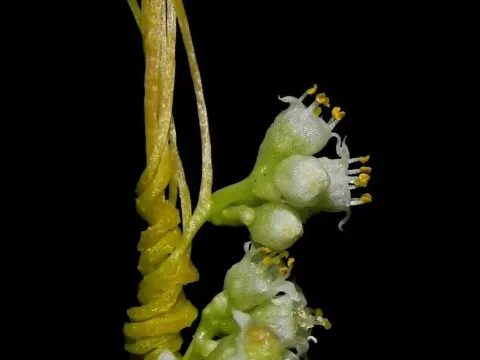
Chinese dodder
Cuscuta chinensis
Chinese dodder (Cuscuta chinensis) is an obligate parasitic plant belonging to the Convolvulaceae family and is recognized globally as a significant agricultural pest.
What the section contains
Chinese dodder
The plant lacks chlorophyll and true roots, relying entirely on haustoria to extract nutrients from its host, which it must locate shortly after germination.
The lifecycle begins with the germination of seeds in the soil during warm spring and summer months, provided there is sufficient surface moisture.
As a parasitic species, it does not follow traditional sowing protocols but instead spreads through contaminated seeds or vegetative fragments.
Effective prevention strategies prioritize the use of clean, certified seeds and strict quarantine protocols to prevent the introduction of this weed into new areas.
This species thrives in warm and humid environments, where it can rapidly expand its network over host plants during the active growing season.
While the soil type has little impact on the dodder itself, the availability of succulent host plants is the primary requirement for its survival and proliferation.
High temperatures and moderate to high humidity levels are optimal conditions for the parasite to establish strong physical connections with its host.
It prefers areas with high solar exposure, which supports the rapid development of its thin, leafless, yellowish stems that wrap around the host.
Effective land management, including proper crop rotation and the elimination of wild host plants, is crucial to reducing the risk of infestation.
Chinese dodder has no beneficial agricultural uses and is instead classified as a quarantine weed that causes severe economic losses in farming.
The parasite stunts host growth, reduces seed production, and can lead to the total collapse of affected crops if the infestation is not mitigated.
Crop quality is severely compromised when infected by dodder, often resulting in rejection by processors due to the risk of spreading the weed's seeds.
Yield loss is compounded by the cost of intensive weed control measures, including chemicals and manual eradication of localized patches.
Farmers must treat infested land with caution, as even small remnants of the parasite can regrow if left in contact with compatible host tissues.
The main threat is the formation of haustoria, which penetrate the host's vascular system, causing metabolic disruption and eventual death of the plant.
Dodder is also a notorious vector for transmitting systemic viral diseases across a wide range of host plants, leading to widespread field outbreaks.
Management techniques include the use of selective herbicides, mechanical removal, and the maintenance of fallow fields to deplete the soil seed bank.
The dense mass of stems provides an ideal micro-habitat for various pests, such as aphids and mites, which can further stress the crop.
Because its seeds can remain dormant for years, multi-year monitoring is necessary to ensure the site is completely free of this harmful parasite.