
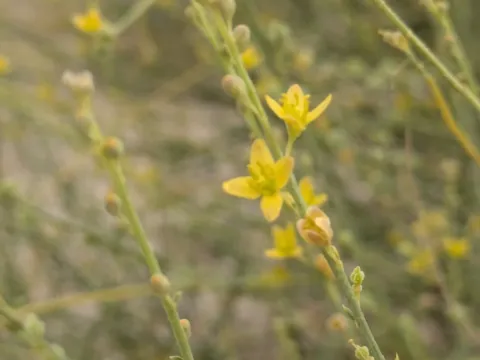
Dipterygium glaucum
Dipterygium glaucum
Seeds of Dipterygium glaucum exhibit high germination capacity in arid conditions following seasonal precipitation events.
What the section contains
Dipterygium glaucum
In natural habitats, reproduction occurs primarily via seeds in early spring or after significant winter rainfall.
For cultivation, sowing should be performed in well-warmed, moist soil with minimal seed depth to ensure proper oxygen access.
The optimal sowing window coincides with the stabilization of temperatures, minimizing the risk of late frost damage.
Surface rolling is recommended to ensure firm soil-seed contact and to prevent seed displacement by strong winds.
Dipterygium glaucum is a perennial subshrub belonging to the Capparaceae family, highly adapted to extreme desert environments.
The plant thrives in sandy soils, dunes, and gravel plains where conventional agricultural crops would fail due to water scarcity.
Its high salt tolerance makes it an excellent candidate for phytoremediation and soil stabilization in degraded arid territories.
Intense solar radiation is essential for the development of the plant, as shading severely inhibits growth and biomass production.
With an extensive root system, it efficiently accesses deep soil moisture, requiring almost no supplemental irrigation once established.
The primary use of this crop is providing vital forage for camels, goats, and sheep in regions across the Middle East and Africa.
While green biomass yield correlates with annual rainfall, the plant remains a valuable feed source even during prolonged droughts.
Dried shoots serve as an essential source of trace minerals for livestock during the sparse winter and summer seasons.
The plant is increasingly recognized for its role in anti-erosion measures, effectively anchoring shifting sands.
Peak productivity is achieved during rapid growth cycles following the rare but significant rainfall events characteristic of desert ecosystems.
Dipterygium glaucum possesses natural chemical defenses that deter many common agricultural pests and herbivores.
Overgrazing remains the most significant threat to local populations, as uncontrolled browsing can lead to total vegetation loss.
Waterlogging resulting from poor drainage or improper cultivation practices may lead to root-rot fungal infections.
Insect herbivory is generally low, as the plant has evolved within a competitive environment with scarce resources.
Anthropogenic pressure and habitat fragmentation represent the primary long-term risks to the survival of the species.