
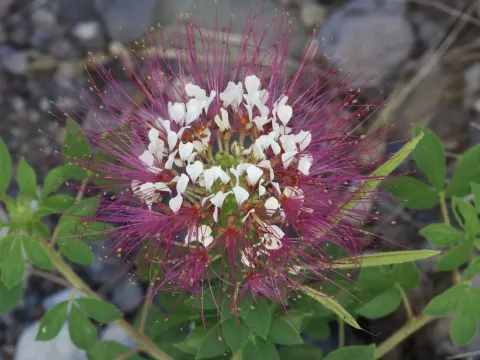
Polanisia
Polanisia
Polanisia (genus Polanisia), a member of the Capparaceae family, requires warm, stable temperatures for successful germination. Sowing in the open field should be scheduled only after the soil has thoroughly warmed up in late spring, as the plant is highly sensitive to frost.
What the section contains

Polanisia
The seeds perform best when sown in loose, well-draining soil. Sowing depth should be kept shallow, approximately 1–2 centimeters, which facilitates rapid emergence and minimizes the energy required for the sprouts to reach the surface.
In regions with short growing seasons, starting Polanisia in pots or seed trays 4–6 weeks before the frost-free date is a common and effective practice for professional growers.
Field spacing is critical for maximizing yield. Typically, maintaining 40 to 60 centimeters between rows ensures adequate airflow and light penetration, reducing the risk of fungal infections and allowing for easier weed management.
Due to the plant's natural tendency to reseed, growers should be prepared for potential volunteer seedlings in subsequent seasons, which may require careful monitoring and selective weeding in following years.
Polanisia is a sun-loving plant that thrives in full sun exposure. Any shade, even partial, can result in leggy stems, reduced flowering, and overall weaker plant structure, which negatively impacts the final seed yield.
The crop prefers light, sandy, or loamy soil textures. Excellent drainage is non-negotiable; Polanisia does not tolerate waterlogged conditions, which can quickly lead to root rot and complete failure of the stand.
Regarding soil pH, the plant is adaptable but performs best in neutral to slightly alkaline soils. Its impressive drought tolerance makes it a valuable crop for arid environments where water resources are limited.
Moderate fertility is sufficient for Polanisia. Over-fertilization, especially with nitrogen, should be avoided as it encourages excessive vegetative growth, which can delay maturity and complicate harvesting efforts.
Native to North American prairies and disturbed sites, the plant has evolved to handle nutrient-poor soils, demonstrating high survival rates and competitive ability even in sub-optimal agricultural conditions.
Polanisia is primarily recognized for its role as a honey plant and a potential oilseed crop. Yield performance is highly dependent on achieving an optimal plant population density and providing sufficient moisture during the critical germination phase.
The extended blooming period makes it an excellent forage source for pollinators. Seed yield can be quite significant, although the pod-like fruits are prone to shattering, which requires careful harvest timing.
Harvesting for seed must be done precisely when the pods turn brown but before they split open. Monitoring the field closely as the crop nears maturity is essential to mitigate losses from seed shattering.
Research into Polanisia as a source of high-quality vegetable oils continues. While commercial oil production is limited by existing harvesting challenges, the biochemical profile of the seeds is highly promising for specific industrial applications.
Successful pollination is a key yield driver. As an outcrossing species, Polanisia benefits greatly from the presence of diverse pollinator populations, making it a synergistic choice for integrated agricultural systems near apiaries.
Polanisia is naturally resilient, possessing robust defenses against many common pests and diseases that plague standard horticultural crops. However, flea beetles can occasionally pose a threat to seedlings during the early cotyledon stage.
Powdery mildew may occur under conditions of high humidity or poor air circulation within the field. Maintaining proper row spacing and ensuring the crop is not overcrowded are the primary cultural controls for this pathogen.
Root-related issues, such as decay or fungal infections, are almost exclusively linked to poor drainage. Ensuring the soil is well-aerated is the best preventative measure against soil-borne pathogens.
Aphids might appear on flower spikes during particularly hot and dry weather. Field scouting is recommended, with biological control options often sufficient to manage populations without the need for synthetic chemical intervention.
Overall, Polanisia is considered an eco-friendly crop that fits well into sustainable and organic farming frameworks, requiring minimal pesticide inputs throughout its development cycle.
Harvesting strategies vary based on the intended use of the crop. For seed production, harvesting is performed at physiological maturity, whereas biomass harvesting for green manure is conducted at peak flowering.
The asynchronous ripening of pods on the main stem and branches is the primary challenge for mechanical harvesting. Swathing the crop and allowing it to dry in windrows is a common method to even out the maturation process before threshing.
After collection, seed cleaning and moisture management are critical. Seeds should be dried to approximately 10-12% moisture to prevent spoilage and ensure the stability of oil content during long-term storage.
Plant residues are rich in organic matter and can be incorporated into the soil following seed harvest to improve soil structure and fertility, providing a secondary benefit to the crop cycle.
Combines should be adjusted to low cylinder speeds to avoid crushing the seeds. Proper calibration of the air blast is also essential to ensure that light debris is removed without blowing away the valuable seed product.