
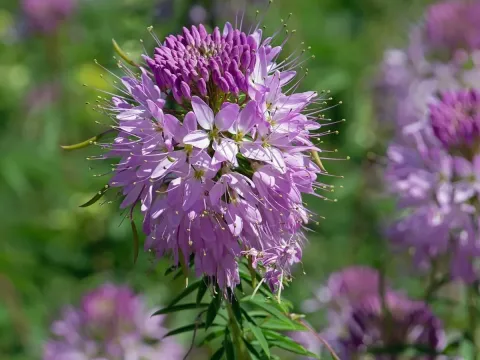
Rocky Mountain beeplant
Cleome serrulata
Cleome serrulata, commonly known as the Rocky Mountain beeplant, is an annual herbaceous species belonging to the Capparaceae family. In agricultural practices, seeding is performed in the spring once soil temperatures reach 12-15 degrees Celsius.
What the section contains
Rocky Mountain beeplant
The optimal time for direct field sowing is late April to early May, depending on the climatic zone. Seeds are planted at a depth of 1-2 centimeters, maintaining consistent spacing between plants.
To accelerate germination, seeds can be pre-soaked in growth stimulants. Seedlings typically emerge within 14-20 days, provided the soil remains adequately moist during the initial development phase.
A planting density of approximately 15-20 plants per square meter is recommended to ensure proper air circulation. In regions with shorter growing seasons, starting plants as transplants is a viable strategy to ensure early flowering.
Sowing should always occur in open, well-lit areas, as this crop has high solar requirements and performs poorly in shaded environments.
The Rocky Mountain beeplant thrives in light, well-drained sandy or loamy soils with a neutral to slightly alkaline pH. Heavy clay soils prone to waterlogging are detrimental to the plant's root system.
The crop is known for its high drought tolerance; however, moderate irrigation is essential during the early stages of growth to support the development of vegetative mass and nectar-producing organs.
As a heat-loving and sun-loving species, it requires locations protected from harsh, cold winds. Optimal temperatures for active vegetative growth range between 20-25 degrees Celsius.
Fertilization should be balanced and moderate. Excess nitrogen can lead to excessive foliage growth at the expense of floral output, so phosphorus-potassium fertilizers are preferred.
The crop generally does not require frequent weeding, as proper planting density allows the plants to quickly canopy the rows, effectively suppressing most weed species.
The primary agricultural application for Cleome serrulata is as a high-value honey plant. It is widely recognized as a productive summer nectar source that attracts large populations of pollinators.
Nectar secretion is highly dependent on ambient weather conditions, with peak production occurring during warm, sunny days. Bees actively visit the blossoms throughout the entire flowering cycle.
Historically, the plant was utilized in ethnobotanical contexts by North American indigenous peoples as a supplemental resource. The leaves contain specific compounds, including various glycosides, of interest for phytochemical study.
Seed yield is significant; a single mature plant can produce thousands of seeds, facilitating excellent self-seeding under favorable environmental conditions.
Integrating this plant into field margins or agricultural landscapes helps maintain biodiversity and enhances the overall health of the local entomofauna.
The primary threat to this crop is excessive soil moisture, which can lead to root rot and fungal infections. Prevention is best achieved through precise irrigation management and site selection.
Pests such as aphids and spider mites can attack young plants during hot, dry spells. Effective management involves the use of systemic insecticides if pest thresholds are exceeded.
In the early stages, young seedlings may be vulnerable to flea beetles, which can rapidly damage leaf tissue. Dusting with wood ash or using biological control agents is recommended as a preventative measure.
Powdery mildew may occur during periods of high humidity and significant temperature fluctuations. Application of appropriate fungicides should begin as soon as symptoms are detected.
To reduce disease pressure, it is essential to follow a standard crop rotation and avoid planting the crop in the same location for consecutive growing seasons.
Harvesting of seed material takes place in late summer or early autumn, once the pods turn a yellowish-brown color. It is critical to monitor for the onset of pod dehiscence to prevent seed loss.
Harvested flowering stems should be dried in a well-ventilated area on trays to ensure even moisture loss and prevent mold formation during the curing process.
Once dried, the seeds are threshed and cleaned using winnowing to remove debris. Storage should be in paper bags kept in a dry, cool location to maintain long-term viability.
When cultivated specifically for honey production, harvesting is not required, although selective removal of spent blooms can sometimes extend the overall flowering period.
If the goal of cultivation is biomass or seed production, the crop is typically mowed or harvested once it reaches physiological maturity and then subjected to primary processing.