
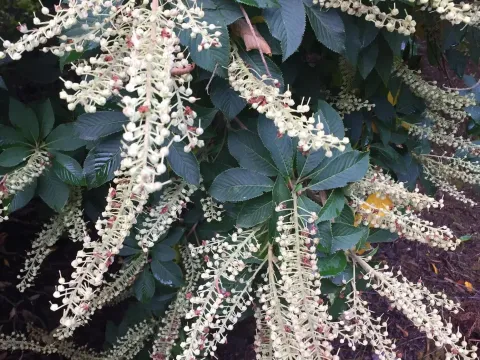
Clethra delavayi
Clethra delavayi
Clethra delavayi is a striking deciduous shrub or small tree belonging to the Clethraceae family. Native to the mountainous regions of China, it is highly valued in horticulture for its spectacular, elongated white flower spikes that bloom in late summer.
What the section contains
Clethra delavayi
The cultural requirements for this plant are specific and non-negotiable. It thrives exclusively in acidic, humus-rich, and well-draining soil. It is highly sensitive to lime and alkaline conditions, which can quickly lead to leaf chlorosis and root stagnation.
Regarding climate, this species prefers sheltered locations with partial shade. While it can handle some exposure, it performs best in positions protected from strong, drying winds, which can damage the delicate foliage and dry out the flower buds.
Consistent moisture is the cornerstone of its success. In cultivation, it must be treated as a moisture-loving plant. During dry spells, regular irrigation is mandatory, and the soil should never be allowed to dry out completely, as this leads to leaf drop.
A key horticultural technique for this species is the application of thick organic mulch, such as pine bark or peat. This practice serves a dual purpose: it retains essential soil moisture and helps maintain the acidic pH balance required for healthy growth.
Clethra delavayi is generally robust, but it can be susceptible to physiological stress if the soil conditions deviate from the ideal. The primary threat is the imbalance of soil pH, which inhibits nutrient uptake and weakens the plant's natural immunity.
In terms of pests, spider mites represent the most common nuisance, particularly in hot and arid summers. Their presence is usually signaled by fine webbing and yellowing of the leaves, necessitating prompt attention and increased atmospheric humidity.
Root rot is a significant risk in poorly drained gardens or areas with heavy clay content. To mitigate this threat, planting on elevated mounds or incorporating drainage materials into the subsoil during the initial planting stage is highly recommended.
Occasional infestations of aphids may occur on tender spring growth. Horticultural soaps or organic neem oil sprays are typically sufficient to manage these populations without damaging the plant's delicate tissues or the surrounding garden ecosystem.
Long-term protection of the plant involves integrated management practices. Proper spacing to ensure adequate airflow, combined with the removal of dead or crossing branches during dormancy, keeps the shrub healthy and resistant to opportunistic infections.