
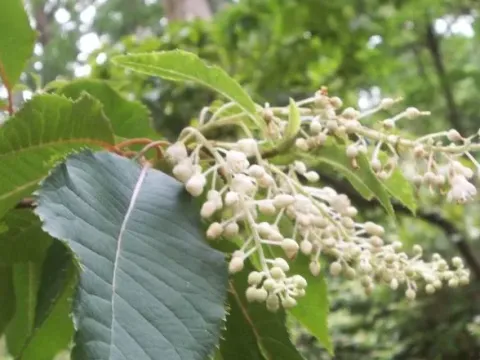
Clethra monostachya
Clethra monostachya
Clethra monostachya belongs to the Clethraceae family. This perennial deciduous shrub is widely recognized for its elegant, slender, spike-like racemes and distinct floral fragrance. It is native to the forested mountain regions of East Asia, where it thrives in shaded, cool, and humid environments.
What the section contains
Clethra monostachya
Successful cultivation requires soil that is rich in organic matter and maintains an acidic or neutral pH level. The plant is highly sensitive to moisture deficiency, making it essential to keep the root zone consistently moist but well-drained. Site selection should prioritize areas with partial shade to prevent leaf scorching.
The botanical structure of the shrub is characterized by simple, alternate, elliptic leaves with serrated margins. The inflorescences emerge at the tips of the shoots, creating a graceful appearance that attracts various pollinators, highlighting its ecological value as a nectar-producing plant.
Agronomic management involves regular mulching to preserve ground moisture and suppress competitive weed growth. Since the species is sensitive to water quality, gardeners should avoid irrigation with hard, alkaline water, which can negatively alter the soil's acidity levels over time.
Its primary agricultural and horticultural use lies in ornamental gardening and urban greening. It is frequently utilized in woodland garden designs, near water features, or as a focal point in borders where the unique architecture of the plant can be fully appreciated by visitors.
Major threats to Clethra monostachya include fungal pathogens, such as leaf spot and powdery mildew, particularly in environments with poor air circulation or excessive humidity. Additionally, spider mites can pose a risk during hot, dry spells, necessitating regular inspection of the foliage for early signs of infestation.