
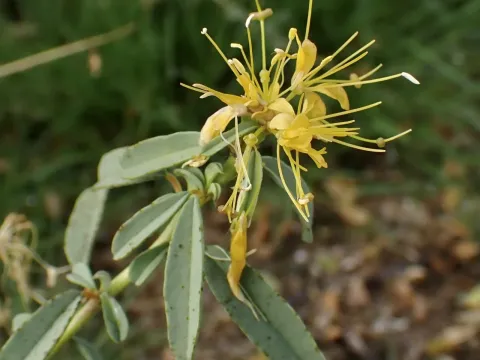
Wislizenia
Wislizenia
Wislizenia is a heat-loving crop belonging to the Capparaceae family, necessitating warm soil conditions for successful germination and early establishment of seedlings.
What the section contains

Wislizenia
Sowing should be carried out in late spring once soil temperatures consistently exceed 15°C, ensuring rapid emergence and reducing the risk of seed decay.
The seeds should be planted at a shallow depth of approximately 1–2 cm, with light soil compaction to facilitate water absorption and establish optimal soil-seed contact.
In regions with cooler spring seasons, transplanting from containers is a viable strategy, provided the plants are hardened off before final placement in the field.
Row spacing should ideally range from 45 to 60 cm to allow for adequate ventilation and to provide each plant with sufficient space for root and biomass development.
Native to arid and semi-arid zones of North America, Wislizenia is highly drought-tolerant and performs best in open, sunny environments with full exposure to solar radiation.
Well-drained, sandy, or light loam soils are essential for this crop, as moisture stagnation is highly detrimental and often causes severe root diseases.
The species displays a notable tolerance to saline soil conditions, making it a promising candidate for experimental cultivation on marginal or degraded landscapes.
While mature plants are highly resilient to water scarcity, supplemental irrigation during the initial vegetative growth phase significantly improves yield potential.
Excessive fertilization, particularly with nitrogen, should be avoided, as it can inhibit proper reproductive growth and negatively impact the overall oil content of the seeds.
The economic value of Wislizenia is primarily derived from its seeds, which serve as a potential source of specialized plant oils with unique chemical compositions.
Yield stability depends heavily on the integration of proper agronomic practices, including effective weed management during the early stages of plant growth.
The crop is characterized by an extended blooming period, which allows for a continuous formation of pods, contributing to a high total yield of harvestable seeds.
Strategic management of plant density is crucial to minimizing competition for nutrients and water, which is particularly vital in environments where rainfall is limited.
Ongoing research into this crop focuses on standardizing the maturity period to synchronize harvesting, thereby improving the efficiency and consistency of seed recovery.
The primary threats to Wislizenia cultivation include root rot and other fungal infections, which are typically triggered by high humidity or poor soil drainage.
Insect pests common to the Capparaceae family, such as certain beetles and aphids, may pose a risk to the vegetative growth, requiring frequent field monitoring.
The prevention of disease outbreaks relies on sound crop rotation practices, ensuring that the plant is not grown in succession with other members of its family.
During prolonged dry and hot periods, spider mite infestations can occur, resulting in chlorosis of the foliage and significant reduction in photosynthetic capacity.
Integrated pest management strategies should prioritize mechanical and biological controls to protect the health of the plants while minimizing chemical residues.
Harvesting Wislizenia requires precision, as the pods are prone to shattering and seed dispersal once they reach full physiological maturity and become dry.
The ideal time to harvest is when the pods change color but before they begin to open spontaneously, ensuring maximum recovery of high-quality seeds.
On smaller scales, hand-harvesting is recommended to allow for selective collection of ripe pods, which helps to mitigate seed loss due to the prolonged maturation period.
Following harvest, seeds must be dried in a well-ventilated, shaded environment to reduce moisture content to safe levels, which is critical for long-term storage viability.
Technological improvements in mechanical harvesting equipment are being pursued to allow for gentle seed extraction, reducing the risk of damaging the seed coat during the process.