
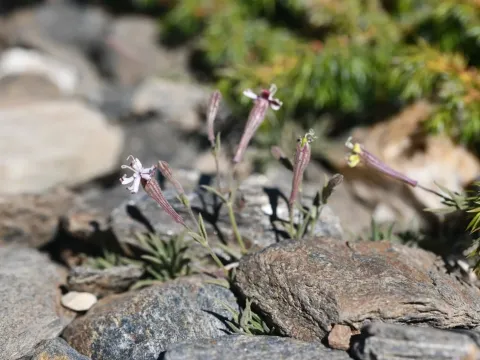
Silene boryi
Silene boryi
Silene boryi is a perennial herbaceous plant belonging to the Caryophyllaceae family. Naturally occurring in high-altitude rocky environments, particularly in the Iberian Peninsula, this plant has adapted to harsh ecological conditions characterized by thin, mineral-rich soils.
What the section contains
Silene boryi
The plant exhibits a distinct cushion-forming growth habit, typically staying compact and low to the ground. Its leaves are coated in fine hairs, which provide a silvery aesthetic and serve as a physiological adaptation to reduce transpiration and protect the plant from high solar radiation.
For successful cultivation, excellent drainage is the primary requirement. Silene boryi thrives in gritty, alkaline to neutral soils. In garden settings, preparing a substrate that mimics its natural scree-like habitat using a mixture of soil, sand, and gravel is essential to prevent root rot.
The species requires full sun exposure to maintain its compact form and produce consistent blooms. While it is highly cold-hardy, the combination of high humidity and cold temperatures during winter can be fatal, making site selection for winter drainage a priority for growers.
Nutrient requirements for this culture are very low. The plant does not require heavy fertilization, as over-feeding can lead to weak, elongated growth and reduced vigor. It is best to maintain the plant in its natural, slow-growing state by providing only minimal, if any, supplemental nutrients.
The most significant threat to Silene boryi is fungal infection, specifically root and crown rots caused by waterlogged soil conditions. Implementing rigorous drainage management is the most effective preventative measure against these pathogens.
Common garden pests such as slugs and snails can pose a risk to the foliage during periods of damp weather. Maintaining a clean, gravelly mulch around the base of the plant often discourages these pests and helps keep the foliage dry.