
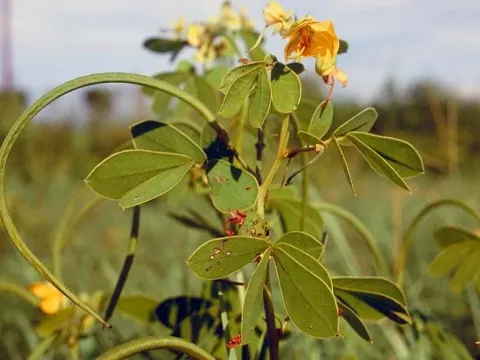
Cassia rogeoni
Cassia rogeoni
Cassia rogeoni is a heat-loving crop, so sowing should only take place once soil temperatures have stabilized at between 18 and 20 degrees Celsius.
What the section contains
Cassia rogeoni
The optimal period for field establishment is the late spring or early summer, when the risk of late frosts, which can be devastating for seedlings, is eliminated.
Seeding depth is typically set between 3 and 5 centimeters, depending on the soil texture and the moisture content at the time of sowing.
When sowing in rows, a spacing of 45–60 centimeters is maintained to provide plants with sufficient space for nutrition and to facilitate mechanical maintenance.
Pre-sowing treatment includes mandatory scarification, as the tough seed coat of this species may hinder natural germination processes in the field.
As a member of the Fabaceae family, this crop demonstrates high adaptability to various conditions, though it prefers well-drained sandy or sandy-loam soils.
For optimal development, the plant requires abundant sunlight and a stable temperature regime characteristic of tropical and subtropical regions.
Cassia rogeoni has a unique ability to fix atmospheric nitrogen through symbiosis with nodule bacteria, making it a valuable rotation crop for soil improvement.
The plant is relatively drought-tolerant but will experience significantly reduced biomass production if subjected to prolonged moisture deficits.
Soil pH should remain in the slightly acidic to neutral range, as extreme alkalinity or high salinity can severely inhibit the growth of the root system.
The biomass yield of Cassia rogeoni is directly dependent on nutrient availability and the precise management of water during critical growth phases.
When utilized as green manure or fodder, average yield metrics vary significantly based on local growing conditions and soil fertility management.
To maximize seed production, effective weed control is essential during the first two months following germination to reduce competition for resources.
Proper integrated management allows for the conservation of up to 20 percent of potential yield, which can reach high industrial standards in favorable seasons.
Regular field monitoring enables agronomists to adjust irrigation and fertilization strategies to achieve maximum productivity per hectare.
The primary threats to the crop include specific fungal diseases affecting the root collar, which tend to develop under conditions of excessive soil moisture.
Pests, particularly certain beetle species, are frequently observed causing damage to young foliage and slowing the development of vegetative organs.
In high humidity environments, leaf spot diseases may occur, reducing photosynthetic efficiency and overall plant vigor throughout the growing season.
Agronomists strongly recommend implementing crop rotation cycles, avoiding the placement of Cassia rogeoni after other legumes to minimize soil-borne pathogens.
An integrated pest management approach, utilizing both biological controls and targeted chemical treatments, is most effective against these identified threats.
Harvesting is performed upon reaching technical maturity, once the majority of the plant biomass has accumulated the necessary nutrients for the intended purpose.
For seed production, harvesting begins after the pods have darkened to prevent premature dehiscence and seed loss in the field.
Mechanical harvesting requires precise combine calibration to minimize physical damage to the seeds, which are quite delicate during the ripening process.
After collection, the produce must be dried in well-ventilated areas until the moisture content reaches safe levels for long-term storage.
Weather conditions during harvest are critical; high ambient humidity can lead to mold development in harvested biomass, severely compromising product quality.