
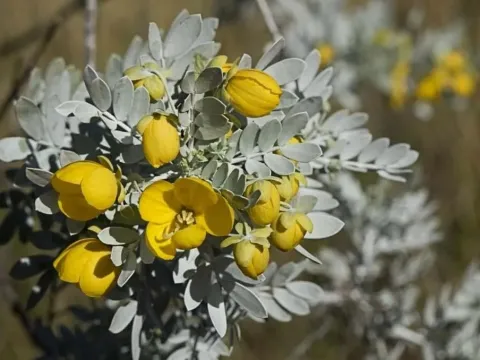
Cassia obtusa
Cassia obtusa
Cassia obtusa is a heat-loving crop, requiring soil temperatures of at least 18–20 degrees Celsius for successful germination and early stage development.
What the section contains
Cassia obtusa
The optimal planting time is late spring, once the threat of late frosts has completely passed, ensuring the plants establish before the peak summer heat.
Seeds should be sown at a depth of 2–3 centimeters in well-prepared, friable soil to encourage uniform seedling emergence and robust root growth.
In field production, maintaining row spacing of 45 to 60 centimeters is recommended to allow for efficient mechanical weeding and proper air circulation.
Adequate soil moisture is critical immediately after sowing to support the germination process, which typically takes about two weeks under favorable conditions.
This species belongs to the Fabaceae family and thrives in full sun exposure, requiring maximum light intensity throughout the growing season for optimal productivity.
It prefers well-drained, sandy loam or loamy soils with a neutral pH, as the crop is highly sensitive to waterlogging and poor soil aeration.
While drought-tolerant, Cassia obtusa benefits significantly from supplementary irrigation during the peak vegetative phase, which enhances biomass yield.
Temperature range of 25 to 32 degrees Celsius is ideal for growth; temperatures dropping below 10 degrees Celsius can cause significant physiological stress.
Balanced fertilization focusing on phosphorus and potassium is preferred, as excessive nitrogen levels can lead to rapid, weak vegetative growth prone to lodging.
The economic yield of Cassia obtusa is primarily based on the dry leaf mass, which is harvested for industrial and pharmaceutical applications.
Biomass production varies depending on soil fertility, planting density, and the effective management of weed competition during the early growth stages.
Strategic harvesting during the peak flowering phase ensures the highest concentration of bioactive compounds, maximizing the commercial value of the crop.
In climates with long, warm growing seasons, two separate cuttings can often be achieved if the plants are well-maintained and adequately hydrated.
Careful attention to seed selection and plant spacing directly influences the uniformity of the harvest, ultimately leading to higher overall yields per hectare.
The crop is susceptible to fungal pathogens such as root rot and leaf spot diseases, which are more prevalent in environments with high humidity and poor ventilation.
Pest pressure from aphids and defoliating caterpillars requires consistent field monitoring to prevent significant damage to the leaf tissue.
Implementing a diverse crop rotation cycle is essential to mitigate the risk of soil-borne pathogens accumulating in fields previously used for other legumes.
Weed management is vital during the first month of the growth cycle, as the slow initial growth rate makes young plants poor competitors for nutrients and space.
Biological controls and selective insecticides should be applied according to local agricultural guidelines to manage pest outbreaks while ensuring safe harvest practices.
Harvesting usually commences at the onset of flowering, the period when the plant's active constituents are at their peak for medicinal use.
Manual or mechanical harvesting methods must ensure minimal leaf damage, as damaged plant tissue can quickly deteriorate and lose its medicinal potency.
The harvested green material must be dried promptly in shaded, well-ventilated facilities to prevent chemical degradation caused by excessive solar radiation.
Post-harvest processing includes sorting and cleaning the material to remove debris, ensuring the final product meets purity standards for industry use.
Properly packaged and stored in dry conditions, the processed material remains stable for extended periods, maintaining its pharmaceutical quality for the end market.