
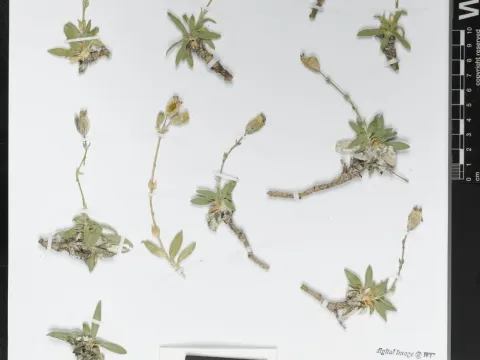
Silene auriculata
Silene auriculata
Silene auriculata belongs to the Caryophyllaceae family. This perennial herb is native to rocky slopes and steppe regions across Eurasia, showing excellent adaptation to specific soil conditions.
What the section contains
Silene auriculata
Sowing in open fields is typically conducted in early spring when soil temperatures reach 8 to 10 degrees Celsius. Autumn sowing is also an option for areas with cold winters, facilitating early germination.
Seeds should be sown at a depth of 1–2 cm. Row spacing should be approximately 30–45 cm to allow for sufficient airflow and to prevent competition among the individual plants.
The establishment phase is critical, as young plants have a slow growth rate. Regular weeding during the first season is essential to ensure that the crops are not smothered by more aggressive weeds.
A density of 15–20 plants per square meter is recommended to establish a consistent canopy, which supports long-term survival and provides reliable crop density for harvest.
This species thrives in well-drained, light-textured soils. It is highly sensitive to waterlogging, which often leads to root rot, so field selection should focus on areas with good natural drainage.
Silene auriculata is known for its high drought tolerance, making it an excellent candidate for regions with limited rainfall or restricted irrigation capabilities.
The plant requires full sun exposure. In shaded environments, the stem structure weakens, and overall biomass production drops significantly, impacting the potential yield.
The soil pH should ideally remain neutral (6.0–7.5). The plant responds well to moderate nitrogen and phosphorus applications early in the growth cycle to boost vegetative development.
Temperature resilience is a key feature of this plant; it is highly resistant to frost, allowing it to survive harsh winters in its native range without specific protection.
Pest pressure is primarily driven by lepidopteran larvae that target buds and foliage. In extremely dry conditions, aphids may also become problematic, necessitating localized control measures.
Powdery mildew represents the most significant fungal threat, especially during periods of high humidity and stagnant air. Proper spacing is the best prophylactic measure against this disease.
Leaf rust may appear in late summer. It manifests as localized spots, which can lead to premature senescence if left untreated, thus reducing the overall vigor of the crop.
Agricultural management should prioritize the removal of diseased debris at the end of the season to prevent the overwintering of pathogens in the field.
Integrated Pest Management (IPM) practices, including the use of systemic fungicides and selective insecticides, should be employed only when monitoring indicates the thresholds are exceeded.
Harvesting of the vegetative mass is typically scheduled for the period preceding the full flowering phase to ensure the highest quality and nutrient concentration.
When grown for seeds, harvesting occurs once the capsules turn a dry, brown color but before they begin to dehisce naturally in the field to avoid significant yield losses.
Mechanical harvesting equipment should be calibrated to prevent excessive seed damage, as the capsules are relatively fragile during the final maturation stages.
Post-harvest handling requires rapid drying in a shaded, well-ventilated area to prevent mold growth, which can occur rapidly if humidity remains trapped in the biomass.
Storage should be conducted in moisture-controlled conditions to maintain seed viability and prevent the breakdown of secondary metabolites within the plant tissue.