
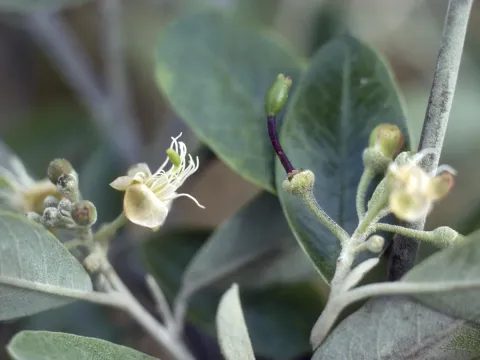
Caper bush of Avicenna
Capparis avicennifolia
Sowing Capparis avicennifolia seeds requires warm conditions, typically in spring when soil temperatures stabilize above +18°C. Because the seeds have a hard, dormant coat, scarification or prolonged soaking in growth stimulants is recommended to increase germination rates.
What the section contains
Caper bush of Avicenna
Farmers can use either direct field seeding or container-based seedling propagation. Transplanting seedlings into open soil should be performed only after the threat of cold nights has passed, as this species is highly sensitive to early cold stress.
The chosen site must receive maximum direct sunlight throughout the day. Row orientation towards the south ensures consistent soil warming, which is vital for the early establishment of the root system of this crop.
Seeds are sown at a depth of 1-2 centimeters. Consistent moisture is required until germination, but once the plants reach the seedling stage, irrigation should be gradually reduced to adapt them to arid field conditions.
Soil preparation is essential for success. The field must be cleared of perennial weeds and deeply tilled to ensure aeration. A sandy, well-draining soil profile is preferred to prevent water stagnation, which is fatal for this species.
Capparis avicennifolia is a xerophytic plant belonging to the Capparaceae family. It is naturally evolved to thrive in hot, dry environments with high solar irradiance and minimal water availability, making it an excellent candidate for semi-arid agriculture.
The crop prefers neutral to alkaline soil conditions. It is remarkably tolerant of saline soils, which makes it a sustainable agricultural choice for restoring or farming on degraded lands that are unsuitable for conventional horticulture.
The ideal temperature range for vegetative growth is between +25°C and +35°C. While the plant is drought-tolerant, it requires specific irrigation management that ensures moisture reaches the deep roots without creating surface puddles.
Drainage is the most critical requirement; the plant cannot tolerate "wet feet." In areas with potential seasonal rains, raised beds or slopes are recommended to ensure excess water moves away from the root collar quickly.
Nutrient management focuses on phosphorus and potassium to support flower bud development. Excessive nitrogen fertilization should be avoided, as it encourages dense foliage production at the expense of the reproductive organs that are the primary harvest target.
Root rot and fungal infections are the most common threats, usually triggered by poor drainage or over-irrigation. Maintaining a dry, well-ventilated soil surface is the most effective way to prevent these diseases in commercial plantations.
Pests such as spider mites and various aphids often target the foliage during peak summer heat. Monitoring programs should be in place to detect infestations early, favoring biological control agents over heavy chemical pesticide use.
Weeds can quickly overwhelm young plants by competing for limited water and minerals. Regular manual weeding during the first two years is essential to ensure the young caper bushes become firmly established.
Leaf-eating insects can reduce the overall photosynthetic capacity of the bush, which eventually lowers the cumulative yield. Maintaining plant vigor through balanced nutrition acts as a natural defense mechanism against these herbivores.
Mechanical damage during soil cultivation should be minimized. The root system of Capparis avicennifolia is sensitive to disturbance, and open wounds on the roots can easily become points of entry for soil-borne pathogens.
The primary harvest target is the immature flower bud, which must be collected before it begins to open. The harvest window for individual buds is very narrow, requiring skilled laborers to identify and pick them at the correct size.
Since the flowering season is extended, harvest occurs multiple times per week throughout the summer. This continuous cycle requires efficient logistics to transport fresh buds to processing facilities immediately after collection.
Post-harvest processing involves curing the buds in brine or salt. This critical step removes natural bitterness and develops the complex, savory flavor profile that makes capers a high-value culinary ingredient.
Productivity increases significantly as the plant matures. By the fourth or fifth year, a well-managed bush reaches its peak yield capacity, provided that harvesting does not cause excessive physical breakage of the primary branches.
Proper storage is required for the final product to ensure longevity. Salt-cured or pickled capers, when kept in cool and dark conditions, retain their quality for extended periods, making them a shelf-stable commodity for international trade.