
Boscia
Boscia
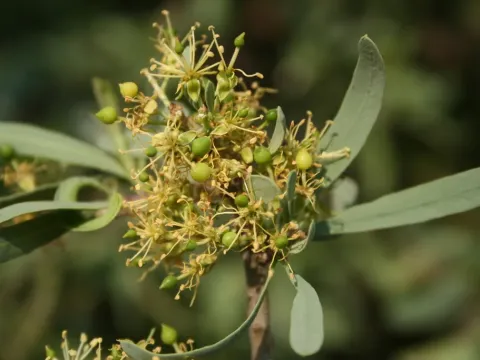
Boscia is a genus of evergreen trees and shrubs belonging to the Capparaceae family. These plants are native to the arid and semi-arid zones of Africa, having evolved to thrive in extreme environments where few other species can survive.
What the section contains


Boscia
The primary distribution of this genus covers dry regions of tropical Africa, including savannas and semi-deserts. The culture is remarkably undemanding regarding soil fertility, capable of growing on rocky, sandy, or saline soils, showcasing significant environmental resilience.
Boscia possesses a high tolerance to prolonged drought and extreme temperatures, making it a cornerstone of desert ecosystems. Its root system is exceptionally deep, allowing the plant to tap into groundwater reservoirs unavailable to shallower-rooted vegetation.
Botanically, Boscia is distinguished by its leathery leaves, which serve to reduce transpiration. The flowers are typically small, often lacking petals, and arranged in racemes, an adaptation suited for insect pollination in harsh, hot conditions.
Economically, Boscia is valued as a critical fodder source for livestock during severe drought periods. Certain species, such as Boscia senegalensis, also provide edible fruits and leaves for local populations, provided they undergo proper processing to remove bitter compounds.
Despite its high survivability, Boscia is susceptible to various pests native to hot climates. Scale insects and mealybugs are the most common threats, often attacking the bark and tender shoots, which can weaken the plant over time.
Fungal diseases are less frequent but can occur in high-humidity conditions combined with poor canopy ventilation, potentially leading to powdery mildew. Excessive grazing by both wild herbivores and domestic livestock remains a major factor limiting natural regeneration.
Larvae of certain weevil species may infest the fruits and seeds, significantly impacting natural recruitment rates in the wild. Agricultural management requires monitoring these pests to ensure the health of seedlings and mature stands alike.
Human activity poses a significant risk to the genus, primarily through deforestation for fuel wood. Protecting established trees from mechanical damage is essential for maintaining local biodiversity and ensuring the long-term survival of the species.
For pest management in plantations, maintaining proper spacing to ensure adequate airflow is recommended. The use of organic-based control methods is preferred in desert regions, where the chemical application may be impractical or ecologically damaging.