
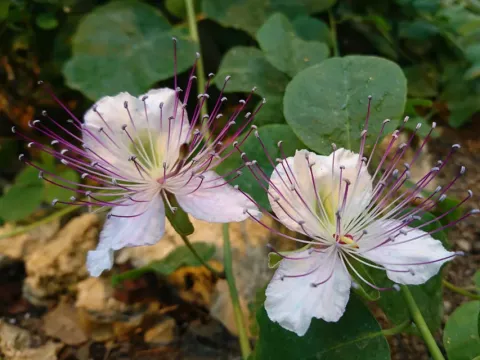
Caper bush
Capparis nobilis
The propagation of the caper bush is generally performed via seeds or vegetative cuttings. Seeds require a mandatory cold stratification period of 1 to 3 months to break dormancy and ensure consistent germination.
What the section contains
Caper bush
Sowing in open fields is best performed in the autumn. Seeds should be planted at a shallow depth of no more than 1–2 cm, as they require minimal soil cover to thrive and emerge successfully in spring.
Vegetative propagation is achieved through greenwood cuttings harvested in early summer. These cuttings are placed in a sandy, well-draining medium to promote root development under controlled humidity.
Commercial plantations prefer utilizing nursery-grown saplings with established root balls, which significantly reduces the mortality rate during the initial transplantation phase.
When planning a plantation, spacing is critical; each shrub requires approximately 1.5 to 2 meters of space to allow for its natural horizontal growth habit.
The caper bush, a member of the Capparaceae family, is a highly resilient xerophyte. It is perfectly adapted to arid Mediterranean climates, thriving in direct sunlight and tolerating extreme heat.
The ideal soil for capers is rocky, sandy, or gravelly with a neutral to alkaline pH. Good drainage is the most vital requirement, as the roots are highly susceptible to rot in waterlogged conditions.
Capers are remarkably tolerant of saline soils, making them an excellent candidate for agricultural production in regions where traditional crops might fail due to salt accumulation.
Irrigation is only necessary during the first year of establishment to ensure the deep taproot system becomes sufficiently developed to access subterranean moisture reserves.
The plant is naturally equipped with protective features, including a low-lying structure and waxy leaf coatings, which help it withstand strong winds and intense solar radiation.
The economic output of the caper bush is focused on the unopened flower buds. A mature bush can yield between 2 and 5 kilograms of buds per season, depending on the age and vigor of the plant.
Economic productivity begins at the 3rd or 4th year after planting. With consistent management and pruning, a single plant can remain productive for up to 30 years.
Frequent harvesting of the buds is essential to stimulate the plant to produce more flower buds throughout the growing season, effectively extending the harvest duration.
Commercial yields vary significantly based on planting density and site conditions, typically ranging from 1 to 3 tonnes of high-quality buds per hectare annually.
Grading is a crucial post-harvest step, as the market price is heavily influenced by the size of the buds, with smaller "nonpareil" buds commanding the highest premium.
The primary pests affecting caper bushes include aphids and spider mites, which feed on the sap of young shoots and tender buds, potentially stunting growth.
Root rot is the most common disease, almost exclusively caused by poor soil drainage or excessive irrigation practices that saturate the root zone for prolonged periods.
Insects like leaf miners may also cause cosmetic damage to the foliage, which, while rarely fatal, can reduce the overall photosynthetic capacity of the bush.
Integrated pest management, focusing on biological controls and maintaining environmental balance, is preferred over chemical interventions to preserve product purity.
Proper field sanitation, including the removal of dead or diseased woody branches, is essential for maintaining the long-term health and disease resistance of the plantation.
Harvesting is a labor-intensive manual task that occurs daily or every few days throughout the summer months. Pickers must manually select buds that are firm and fully closed.
- Harvesting happens during the early morning hours to keep buds crisp and fresh.
- The cycle of collection repeats every 8–10 days to capture buds before they flower.
- Immediate post-harvest processing is required to prevent unwanted wilting and moisture loss.
- Buds are traditionally cured in sea salt or vinegar to create the familiar condiment.
- High-quality control involves constant sorting by size and color to ensure uniformity.