
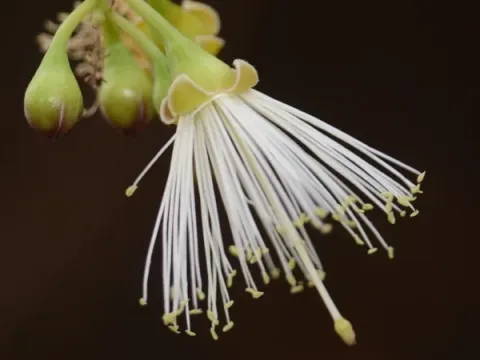
Capparis apetala
Capparis apetala
Capparis apetala is a woody vine or shrub species belonging to the Capparaceae family. Propagation is primarily achieved through seeds, which require a period of stratification to improve germination rates in controlled environments.
What the section contains
Capparis apetala
Seeds should be sown in a well-draining, sandy-gravel substrate that mimics the plant's natural arid habitat. Maintaining a consistent temperature between 22–25 degrees Celsius is critical for successful emergence of seedlings.
The use of peat pots is strongly recommended to minimize root disturbance during transplanting, as the root system of Capparis species is extremely sensitive to physical stress and handling.
Seedlings should be hardened off before moving them to their final planting location in late spring once all risks of frost have passed. Early growth is slow, requiring patience and minimal interference with the root zone.
Spacings should be sufficient to allow for the lateral spread of vines, usually requiring at least 2 meters between individual specimens to facilitate air circulation and growth.
This species demands full sun exposure to thrive and initiate the flowering process. Inadequate light conditions will result in spindly, etiolated growth and a significant reduction in biomass.
The ideal soil profile is rocky, limestone-based, and highly permeable, ensuring that water does not remain near the root collar. The plant is exceptionally tolerant of poor, infertile soils, which are typical in its native range.
As a drought-tolerant crop, Capparis apetala relies on an extensive root system to source deep-seated moisture. During the initial establishment phase, moderate irrigation is necessary, but this should be tapered off as the plant matures.
The plant prefers a neutral to slightly alkaline soil pH. In acidic soil conditions, the application of crushed limestone or dolomite is necessary to correct the chemical balance for optimal nutrient uptake.
Cultural maintenance involves light weeding around the base of the plant to prevent competition, especially in the first two years of development when the plant is most vulnerable.
Fungal diseases are the primary threat, often stemming from high humidity levels or poor drainage in the cultivation area. These pathogens can cause stem rot and leaf spot, which compromise the plant's vigor.
Spider mites are common pests in hot, dry climates, frequently colonizing the undersides of leaves. Their feeding activities cause visible chlorosis and can lead to premature leaf drop if not managed promptly.
Aphids occasionally target developing floral buds. Protecting these buds is essential, as any damage to them directly affects the potential harvest of the caper buds.
Root rot remains the most lethal threat to the plant, usually caused by overwatering or soil compaction. Preventing waterlogging is the most effective strategy for managing this risk.
- Powdery mildew development in poorly ventilated areas
- Leaf-eating caterpillars during early seasonal growth
- Bacterial infections resulting from mechanical damage