
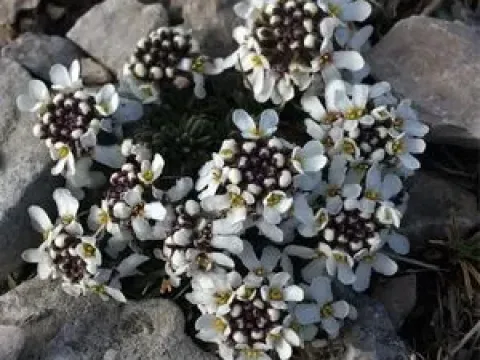
Iberis saxatilis
Iberis saxatilis
Sowing Iberis saxatilis is typically performed in early spring or autumn. The seeds require well-draining soil and exposure to natural light to initiate the germination process.
What the section contains
Iberis saxatilis
When starting indoors, seeds should be placed in seed trays with a sterile potting mix. Keep the substrate lightly moist but never saturated to prevent damping-off disease.
For outdoor sowing, prepare a site with full sun and light soil. Sow seeds in rows or clusters, covering them with a very thin layer of substrate, as they need light to germinate.
Transplanting seedlings should be done carefully, ensuring that the root ball remains intact. Space individual plants at least 30 centimeters apart to allow for proper air circulation.
Regular monitoring during the seedling stage is crucial for ensuring uniform growth. Once established, the plants will naturally spread in their preferred rocky environment.
Iberis saxatilis, a member of the Brassicaceae family, is native to the rocky landscapes of Europe. It thrives in poor, alkaline, and highly permeable soils.
The plant demands a site with excellent drainage. In heavy soils, it is highly recommended to add gravel or coarse sand to the planting hole to prevent root rot.
Full sun is essential for the plant to maintain its compact habit and produce abundant white flowers. Shady locations will lead to weak, elongated stems and poor blooming.
It is a highly drought-tolerant species once established, making it a perfect choice for rock gardens, dry walls, and containers that mimic its natural mountain habitat.
Winter hardiness is one of its key attributes. However, in regions with extreme moisture during winter, providing a protective covering can prevent crown rot.
Root rot is the most significant threat to Iberis saxatilis, usually caused by stagnant water in the soil. Proper site selection and drainage are the primary preventative measures.
Flea beetles are common pests that attack the leaves of many Brassicaceae species. They can create tiny holes in the foliage, which compromises the aesthetic value of the plant.
Aphids might infest the flower stalks during the spring months. Using mild insecticidal soaps or natural neem oil treatments is usually sufficient to manage these infestations.
Good air circulation is vital to prevent powdery mildew or other fungal infections. Avoid overhead watering to keep the foliage dry during humid weather conditions.
Regular inspection of the plant base for any signs of decay allows for early intervention, ensuring the long-term survival of the rock garden display.