
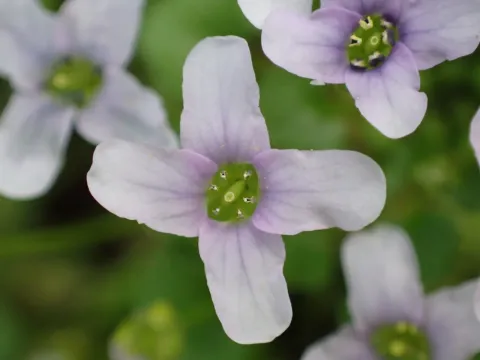
Ionopsidium
Ionopsidium
Ionopsidium, most commonly represented by the species Ionopsidium acaule, is a delicate annual plant belonging to the Brassicaceae family. Seeds are typically sown directly into the garden soil in early spring as soon as it can be worked.
What the section contains

Ionopsidium
For an earlier bloom, you can sow the seeds in late autumn. This allows for natural cold stratification during winter, resulting in early spring flowering as soon as the weather warms up.
The seeds are exceptionally small, so they should be sown on the soil surface. Lightly pressing them into the substrate is sufficient, as they require light to germinate effectively.
The growth cycle is relatively short, making it an excellent candidate for succession planting. Sowing every three to four weeks throughout the spring and early summer ensures a continuous display of flowers.
Optimal germination occurs at temperatures between 12°C and 18°C. Keeping the seedbed consistently moist during the first two weeks is crucial for a successful stand.
This plant thrives in full sun but adapts well to partial shade. In warmer climates, light afternoon shade is recommended to prevent the soil from drying out too quickly and to extend the blooming season.
Soil requirements are modest, though the plant prefers loose, well-draining loam. Poor drainage is detrimental, as the roots are sensitive to waterlogging and may develop rot.
Consistent moisture is the key to healthy growth. While it is not a bog plant, Ionopsidium does not tolerate prolonged drought and will quickly wilt if the soil becomes bone-dry.
Fertilization should be handled with care. A light application of a balanced, water-soluble fertilizer can be applied during active growth, but avoid high-nitrogen formulas that promote foliage over blossoms.
Ionopsidium is noted for its ability to withstand cool temperatures. It is often one of the first flowers to bloom in the garden, showing high resilience against typical early-season frost.
Flea beetles are the most significant pest for Ionopsidium. They frequently attack the foliage of young seedlings, often necessitating the use of horticultural soap or organic insecticidal treatments.
High humidity and poor airflow can lead to the development of fungal pathogens, such as damping-off in seedlings or grey mold on mature plants. Proper spacing and site selection help mitigate these risks.
Slugs and snails can cause substantial aesthetic damage to the low-growing rosettes of leaves. Manual removal or bait stations are effective management tools during rainy spells.
Powdery mildew can occur late in the season if days are warm and nights are damp. Keeping the foliage as dry as possible and removing infected debris helps manage the spread of the fungus.
To prevent the buildup of soil-borne diseases, it is advisable to practice crop rotation, especially when other Brassicaceae plants have been grown in the same plot recently.