
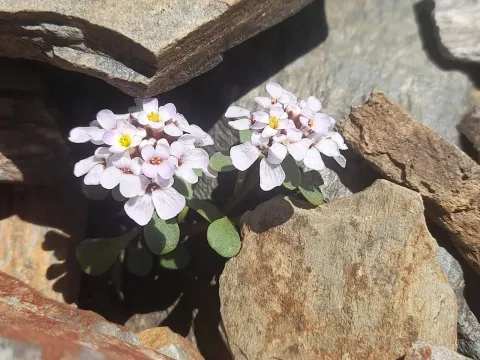
Iberis spathulata
Iberis spathulata
Iberis spathulata is best propagated by seeds sown directly in the garden during early spring or autumn. The seeds require a well-prepared, loose substrate to ensure optimal germination rates and root development.
What the section contains
Iberis spathulata
When sowing, cover the seeds with a very thin layer of fine soil or sand. Because the seeds are small, deep burial can prevent them from reaching the surface, which is critical for their early growth stages.
For greenhouse cultivation, sow seeds in late winter to secure strong, established plants by the start of the summer season. Maintaining a temperature of about 15-20 degrees Celsius is ideal for uniform germination.
Ensure the soil remains consistently moist but not waterlogged during the initial stages. Once the seedlings develop their first true leaves, they can be gradually hardened off before permanent transplanting.
Space the plants approximately 25 centimeters apart to allow for proper airflow. Proper spacing prevents overcrowding, which is a major factor in reducing plant health issues in later stages.
Iberis spathulata, a member of the Brassicaceae family, is native to high-altitude alpine regions of the Pyrenees. It is highly adapted to rocky, skeletal soils with excellent drainage.
The plant thrives in full sun exposure. While it is naturally resilient, it performs best in positions where it receives at least six hours of direct sunlight daily to maintain a dense, cushion-like habit.
Soil quality should lean toward the alkaline side with low organic content. The plant does not require high levels of nutrients and is better adapted to lean soils where competition with other species is minimal.
Water requirements for this species are low. It is essential to avoid sites where moisture accumulates, as the plant is extremely susceptible to root rot in poorly drained conditions.
This species is highly cold-hardy, surviving typical alpine winter temperatures. It generally does not require winter protection unless extreme fluctuations occur without a steady snow cover.
The primary concern for Iberis spathulata is the development of fungal pathogens, particularly root rot, which typically occurs due to poor soil drainage or excessive irrigation during warm periods.
Pest attacks are frequently caused by flea beetles, which can skeletonize the foliage during the spring. Monitoring is essential as these insects can cause significant cosmetic and developmental damage.
Aphids may occasionally infest the developing flower buds, leading to stunted growth. If found, early intervention with organic soap-based treatments is often sufficient to control the population.
Powdery mildew is another common threat, appearing as a white dusting on leaves. This usually indicates that the planting site has insufficient air circulation or high local humidity.
Preventative care is the best strategy. By choosing sites with high solar exposure and excellent drainage, most environmental and pathological threats to this species can be effectively neutralized.