
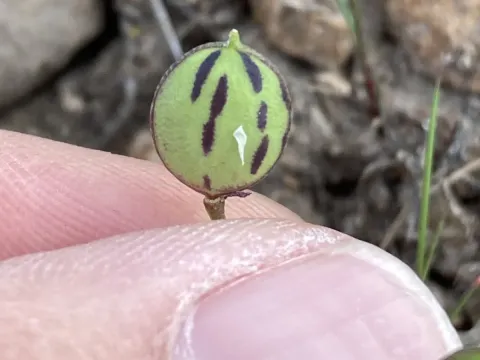
Idahoa
Idahoa
Idahoa (Idahoa scapigera) is a small annual herb belonging to the Brassicaceae family, primarily native to the western regions of the United States.
What the section contains

Idahoa
The plant exhibits an early-season growth habit, utilizing spring moisture in arid environments to complete its life cycle before the onset of summer drought.
In a controlled cultivation setting, sowing should be performed as early as the soil can be worked, preferably in late winter or early spring to mimic natural germination conditions.
Seeds are tiny and should be sown near the surface, requiring firm contact with moist soil to ensure consistent and uniform emergence.
Given its short growing season, Idahoa is often considered a winter annual in its native habitat, germinating from late autumn to early spring depending on the specific microclimate.
Idahoa thrives in well-drained, sandy or gravelly soils that provide minimal resistance to root development and prevent water stagnation.
The crop is highly adapted to open, sun-exposed sites and does not compete well with dense weed cover or shading from taller vegetation.
Optimal growth occurs in cooler temperatures, making the plant remarkably resilient to frost during the seedling stage, which allows for early establishment.
Soil pH should ideally be neutral or slightly alkaline, reflecting the typical geology of the intermountain regions where the plant naturally occurs.
Supplemental irrigation is rarely required if soil moisture is managed correctly during the early growth phase, as the plant is evolved to withstand dry conditions.
Like many members of the Mustard family, Idahoa is susceptible to infestations by flea beetles, which can cause significant damage to cotyledons and true leaves.
Root rot and damping-off can occur if the soil remains saturated for extended periods, especially during the seedling stage when roots are sensitive.
Aphids can also be a localized concern during the flowering stage, potentially impacting seed development if populations are left unchecked.
Integrated pest management is essential, focusing on maintaining soil health and providing adequate spacing between individual plants to prevent disease spread.
Cultural controls, such as crop rotation and the timely removal of infested debris, are the most effective strategies for long-term health management of this crop.
The harvest phase is critical due to the plant's natural tendency to shatter, where silicles open and release seeds upon reaching full maturity.
Farmers must monitor the color of the pods carefully; they should be harvested just as they begin to transition from green to a light brown or tan color.
Hand-harvesting or specialized low-impact mechanical methods are preferred to minimize the physical agitation of the plants, which could lead to premature seed dispersal.
Post-harvest, the plants should be dried in a sheltered environment with sufficient airflow to ensure that seeds dry thoroughly without molding.
Once dried, the seeds are extracted through threshing and winnowing, ensuring that the final product is free from moisture and organic impurities for optimal shelf life.