
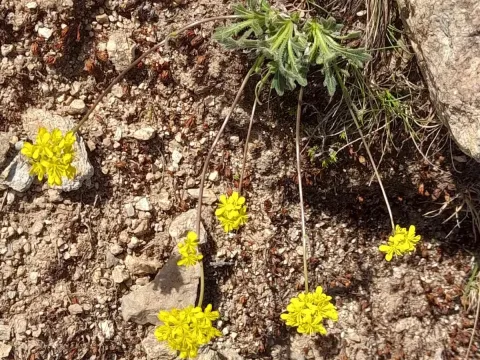
Intermediate spectaclepod
Biscutella intermedia
The Intermediate spectaclepod (Biscutella intermedia) is a botanical member of the Brassicaceae family. It is a perennial or biennial herbaceous plant that typically thrives in the arid, Mediterranean-like climates of Southern Europe, showcasing high environmental adaptation.
What the section contains
Intermediate spectaclepod
Morphologically, the plant presents a dense basal rosette of leaves from which thin stalks emerge, carrying clusters of yellow flowers. The common name, spectaclepod, refers to the distinctive shape of its fruit, which consists of two disc-like sections resembling old-fashioned glasses.
In terms of agricultural requirements, this species demands highly permeable, well-drained soil. Sandy or rocky substrates are ideal, as the plant is evolved to prevent root asphyxiation during wet periods. Excessive moisture is the primary factor limiting its survival.
The crop requires full solar exposure to complete its physiological cycles effectively. High light intensity is essential for maintaining plant vigor and preventing the etiolation that occurs when the plant is shaded by faster-growing species.
While not a traditional broad-acre crop, Biscutella intermedia is recognized for its utility in xeriscaping and restoring disturbed rocky sites. Its ability to extract nutrients from low-fertility soils allows it to serve as a low-input groundcover in specific agricultural landscapes.
The primary threats to Biscutella intermedia are soil-borne pathogens that thrive in wet conditions. Root and crown rots are the most common cause of crop failure, especially in clay-heavy soils that retain moisture for too long.
Flea beetles are the most frequent insect pests. These insects can cause significant damage to the leaf tissue of young seedlings. Because they consume the epidermis, they leave the plant susceptible to secondary infections and desiccation.
Aphids represent another biological threat, specifically during the flowering stage. These pests colonize the floral stalks, draining vital fluids and reducing the plant's potential for successful seed production.
Effective management strategies involve ensuring adequate plant spacing to facilitate airflow and rapid drying of the soil surface. Reducing ambient humidity around the basal rosette is a critical component of disease prevention.
Integrated pest management, including regular monitoring and the judicious application of insecticides, is recommended when pest populations exceed acceptable thresholds. Using resistant cultivars or avoiding monocultures can further decrease the risk of total loss.