
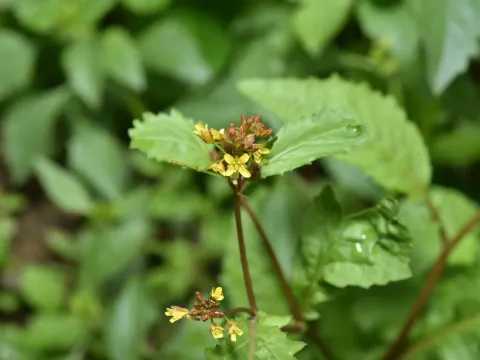
Indian cress
Rorippa indica
Indian cress (Rorippa indica) belongs to the Brassicaceae family and is recognized for its rapid growth cycle. It is a herbaceous plant that thrives in temperate to tropical climates, often spreading through natural seed dispersal.
What the section contains
Indian cress
For commercial or garden cultivation, seeds should be sown directly into well-prepared soil as soon as temperatures allow for germination. Being very small, the seeds require shallow placement, typically no deeper than 0.5 centimeters.
Moisture control during the germination phase is essential. Maintaining a consistently damp surface ensures that the seeds sprout uniformly, which is critical for a manageable harvest timeline.
Succession planting is recommended to ensure a steady supply of fresh leaves. Sowing every 2-3 weeks allows growers to maximize the productive season before the onset of extreme heat.
The plant is highly adaptable and can establish itself quickly in new environments, so managing the seed bank is important to prevent it from becoming an unwanted weed in non-target areas.
Indian cress requires nutrient-rich, moist soil to achieve its maximum yield. It performs best in areas with high water retention, making it an excellent candidate for riparian planting or frequently irrigated beds.
While the plant can tolerate partial shade, full sun exposure promotes more robust and flavorful vegetative growth. Exposure to light is a primary driver for biomass accumulation in this species.
The ideal temperature for development ranges between 15 and 22 degrees Celsius. High temperatures often trigger a rapid transition from vegetative growth to flowering, which diminishes the quality of the harvested leaves.
Soil pH should ideally be neutral. Amending soil with organic compost prior to planting enhances water holding capacity and provides the necessary nutrients for quick leaf development.
Consistent watering is the single most important maintenance task. Drought stress severely impacts leaf texture and flavor, often causing the plants to become bitter prematurely.
Flea beetles are the most common and damaging pest, particularly during the early seedling stage. They create small holes in the leaves, which can stunt the growth of young plants if not managed.
Aphid infestations may occur in dense plantings where air circulation is limited. Monitoring the undersides of the leaves is a key management strategy to detect these pests early.
Fungal diseases like downy mildew can be prevalent in conditions of high humidity and poor ventilation. Ensuring proper spacing between plants is an effective preventative measure.
Root rot can be an issue if the soil remains waterlogged for extended periods. While the plant loves water, it requires at least minimal soil drainage to prevent fungal pathogens from attacking the root zone.
- Flea beetles
- Aphids
- Downy mildew
- Root rot
- Slugs and snails
Harvesting typically begins 30 to 45 days after emergence. The leaves possess a distinct pungent flavor, common among many members of the mustard family, making them excellent for culinary use.
Plants can be harvested by cutting individual leaves or by trimming the entire rosette. If trimmed carefully, the plant may regenerate, allowing for multiple harvests from the same root system.
Timely harvest is critical; once the plant begins to bolt and produce flower stalks, the leaves lose their tenderness and flavor profile significantly. Frequent monitoring of growth stages is advised.
Post-harvest care involves quick cooling to prevent wilting. The leafy greens are perishable and should be stored at low temperatures to maintain their crisp texture and nutritional value.
In larger operations, mechanical harvesting is performed during the cooler morning hours to ensure that the produce is fully turgid and survives the transport process without damage.