
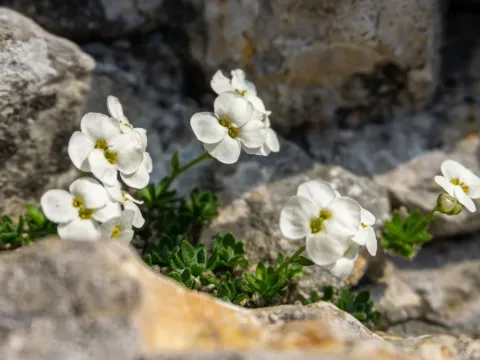
Starry whitlow-grass
Draba stellata
Starry whitlow-grass (Draba stellata) is a perennial herbaceous plant classified within the Brassicaceae family. It is natively adapted to alpine and subalpine environments, thriving in harsh high-altitude conditions across European mountain ranges.
What the section contains
Starry whitlow-grass
The plant is distinguished by its basal rosettes of leaves covered in characteristic stellate hairs. These specialized structures serve as a protective mechanism, helping the plant retain moisture and maintain thermal stability in windy, exposed conditions.
Regarding soil requirements, Draba stellata demands excellent drainage and favors gritty, sandy, or stony substrates. It performs poorly in heavy, water-retentive clay soils, which can lead to rapid root decline and death of the plant during the dormant season.
In terms of climatic needs, the species requires full sun exposure and a cool, temperate environment. It is perfectly cold-hardy, having evolved to withstand freezing temperatures and heavy snow cover, but it struggles with high heat and humidity during mid-summer.
In horticultural practice, this plant is valued for rock gardens and crevice planting. Its ability to create low-growing, dense foliage mats makes it an ideal selection for specialized alpine displays where drainage and light are strictly managed.
The primary threats to Starry whitlow-grass cultivation are soil-borne fungal diseases, specifically root rots caused by Phytophthora or Pythium species. These occur almost exclusively when drainage is insufficient or when humidity levels remain too high for extended periods.
Pest pressure is generally low, but flea beetles and certain species of aphids may occasionally feed on young leaves. Managing these threats involves careful site selection and maintaining a sterile, fast-draining substrate to discourage pathogen proliferation.