
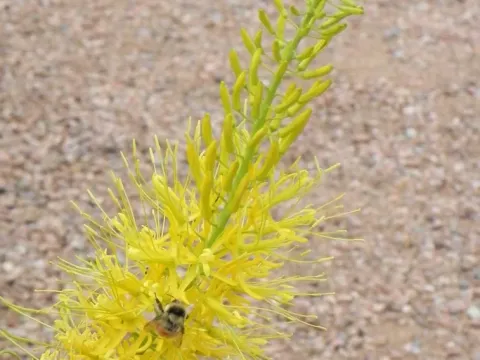
Stanleya
Stanleya
Sowing of Stanleya in natural environments typically occurs in the autumn, allowing seeds to undergo necessary winter stratification before spring germination.
What the section contains


Stanleya
When cultivating for scientific or environmental purposes, seeds should be sown in early spring in well-aerated, light soil to ensure successful seedling establishment.
The seeds are relatively small and should not be buried deeply; a shallow covering of soil is sufficient to promote rapid and uniform germination.
Strategic placement in rows allows for better maintenance and observation, which is crucial when studying the plant's ability to extract minerals from the soil.
Initial watering should be light, aimed at keeping the soil moist without creating conditions that favor seed decay or fungal development.
Stanleya belongs to the Brassicaceae family and is recognized as a premier selenium hyperaccumulator, capable of thriving in highly seleniferous soils.
The plant demonstrates remarkable drought resistance and is natively found in arid, high-alkaline desert environments across North America.
Soil requirements focus on high mineral content and excellent drainage; the plant fails in waterlogged conditions which inhibit root development.
High levels of solar radiation are required for optimal biomass production, as Stanleya has evolved to maximize photosynthetic activity under intense sun.
It acts as an indicator species, showing excellent tolerance for soil elements that are typically toxic to most agricultural crop species.
Stanleya possesses a strong chemical defense mechanism due to its high selenium content, making it largely unpalatable to common insect herbivores.
The main threat to plant health is root rot, which occurs if the soil drainage is inadequate or if there is persistent moisture around the root crown.
Fungal pathogens such as powdery mildew may appear during periods of high humidity or stagnant air flow, necessitating better spacing between plants.
Monitoring for signs of nutrient imbalance or secondary pests is advised, although biological resistance is significantly higher than in traditional crops.
Maintaining a clean, weed-free area around the base helps in providing proper air circulation, further reducing the risk of developing plant diseases.
Harvesting is primarily conducted to remove selenium from contaminated soils, so timing should coincide with the plant's maximum biomass development.
Cutting the plants before seeds are fully developed helps in preventing uncontrolled dispersal and allows for easier handling of the biomass.
The biomass must be treated as specialized waste due to the high concentration of accumulated elements, following established environmental safety protocols.
Mechanical harvesting equipment is used to process large areas efficiently, ensuring that the roots remain intact if further cycles are desired.
Storage of the harvested material requires dry conditions to prevent secondary environmental leaching of the absorbed minerals during the drying process.