
Spiny cress
Lepidium spinosum
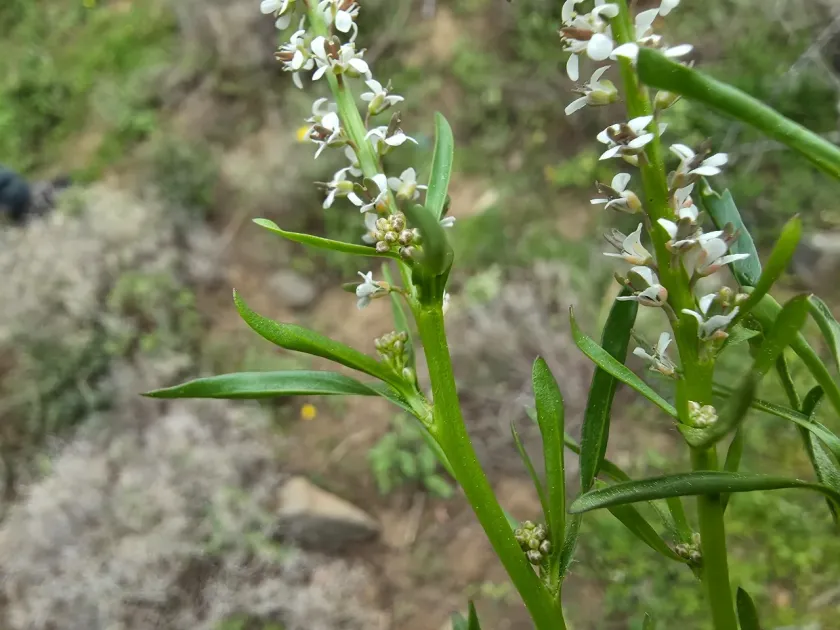
Description
Sowing dates
The sowing of spiny cress is usually planned for early spring, as soon as the soil warms up to 8–10 degrees Celsius. This cold-resistant plant is able to withstand minor late frosts, so early sowing dates are optimal for the development of a strong root system.
Seeds are sown at a depth of no more than 1–2 centimeters, as they are small in size. It is important to ensure good seed contact with moist soil, which is why rolling the field after sowing is recommended.
The sowing scheme is chosen based on the subsequent mechanization method: row spacing usually ranges from 20 to 40 centimeters. The row method allows for effective weed control in the initial stages of growth.
If commercial produce is needed at different times, a conveyor sowing method is practiced with an interval of two weeks. This ensures a continuous supply of raw materials for processing or sale.
Seedlings appear quite quickly, usually 7–10 days after sowing, provided that an optimal moisture level is maintained in the topsoil.
Growing requirements
Spiny cress belongs to the Brassicaceae family and prefers open, well-lit areas. The plant is highly demanding of sunlight intensity; shading leads to stem stretching and a decrease in the quality of the commercial mass.
The crop develops best in light, sandy loam or loamy soils with a neutral or slightly alkaline reaction. Heavy clay soils with waterlogging negatively affect the root system and can cause root rot.
Spiny cress demonstrates moderate drought resistance; however, it requires regular watering during the active vegetative growth phase to ensure juicy greens. Excessive moisture during the flowering period is undesirable, as it can provoke fungal infections.
Nutritional requirements include moderate nitrogen fertilization in the early stages to stimulate leaf growth. Phosphorus-potassium supplements contribute to strengthening cell walls and increasing plant resistance to adverse climatic conditions.
An important factor for success is crop rotation. It is not recommended to return spiny cress to the same plot earlier than 3–4 years later due to the accumulation of specific pathogens characteristic of all cruciferous plants.
Yield
The yield of spiny cress depends on the level of agronomy, soil fertility, and regional climatic conditions. By following all recommendations, one can count on a consistently high commercial return per unit area.
The main part of the harvest is the aerial mass, which is harvested before the start of the intensive flowering phase. As the stems become lignified, the taste and appearance of the produce significantly deteriorate.
The use of modern varieties and hybrids allows for an increase in yield. Intensive cultivation technologies include fertigation, which significantly increases the number of cuts per season.
On an industrial scale, the average yield varies widely, ranging from 15 to 25 tons of green mass per hectare. The indicator depends heavily on whether the crop is grown for the fresh market or for drying.
Post-harvest processing plays a key role in preserving the harvest. Spiny cress greens lose moisture quickly, so they require immediate cooling or special packaging for transportation.
Main diseases and pests
The main pest for this crop is the cruciferous flea beetle, which can destroy young seedlings in a matter of days. To protect the crops, both agrotechnical methods and modern insecticides are used in the early stages of development.
In conditions of high humidity, spiny cress often suffers from clubroot. This dangerous disease affects the root system, leading to wilting and death of the entire plant during hot hours.
White rust and downy mildew are also common problems. These fungal diseases manifest as specific spots on the leaves, which critically reduces the commercial value of the crop.
Aphids and cabbage moth caterpillars can cause significant damage in the summer, eating leaf plates and damaging growth points. Regular monitoring of the crops allows for early detection of hotspots and timely intervention.
To prevent diseases, it is recommended to use high-quality seeds, disinfect the soil, and strictly observe spatial isolation from other members of the Brassicaceae family.
Harvesting
Harvesting is carried out in the morning hours, when the dew has dried but the plant still retains maximum turgor. This guarantees better freshness retention after cutting and transportation to the processing site.
The harvesting method depends on the intended use: for the market, the greens are cut manually or with small mowers at a height of several centimeters from the ground. It is important not to damage the root collar to allow for subsequent regrowth.
If seed harvesting is planned, harvesting is performed at the stage of full maturity, when the pods acquire a characteristic straw color. This requires timely monitoring to avoid mass seed shedding at the slightest mechanical impact.
After cutting, the produce is sorted, removing damaged or yellow leaves. Industrial conditions use automated lines for washing and packaging in a protective atmosphere to extend shelf life.
Storage of the harvested crop should be carried out at low positive temperatures (about 0–2 degrees) and high air humidity. Under these conditions, spiny cress greens retain their consumer properties for several weeks.