
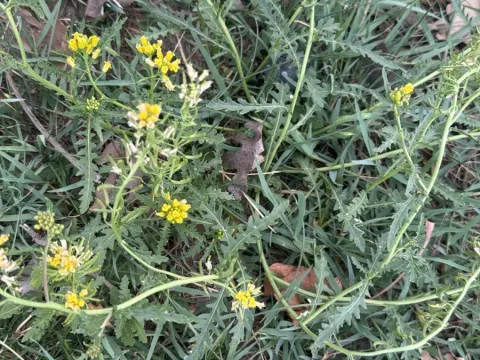
Spreading yellowcress
Rorippa sinuata
Spreading yellowcress, known botanically as Rorippa sinuata, is a member of the Brassicaceae family that propagates through both seeds and a vigorous creeping root system.
What the section contains
Spreading yellowcress
Seed germination typically occurs in early spring, requiring adequate soil moisture and moderate temperatures to break dormancy and initiate early vegetative growth.
Vegetative reproduction through underground runners allows the plant to expand its territory quickly, making it a persistent competitor in arable land and meadows.
Agronomic management should focus on early-season control before the root system establishes deep connections, which significantly increases the difficulty of mechanical removal.
The peak growth phase occurs in late spring, which coincides with the development of secondary shoots, demanding timely intervention to prevent further spread.
This species thrives in moist environments and is frequently found in river floodplains, wet pastures, and riparian zones where soil moisture remains consistent.
It exhibits strong adaptability to various soil types, ranging from sandy loams to heavy clays, provided there is enough water to support its succulent tissues.
While Rorippa sinuata favors full sun for optimal photosynthesis and development, it possesses the ability to tolerate partial shade under dense crop canopies.
Climatic requirements are centered around the need for moderate humidity, as extreme drought stress can cause temporary growth cessation and reduce overall biomass.
Soil nutrient levels influence the plant's spread, with higher concentrations of nitrogen often accelerating the elongation of its stems and foliage development.
As a cruciferous weed, spreading yellowcress serves as a critical alternative host for various pests that damage economically important crops in the same family.
Flea beetles are a primary concern, as they move from this weed to vegetable crops like cabbage, canola, or mustard, causing significant foliar damage.
The plant can harbor various viral pathogens and fungal spores, facilitating the infection of adjacent cultivated plants through vector-borne transmission.
Root-knot nematodes may also utilize the root system of this species, potentially increasing soil pathogen loads if the weed is not managed correctly.
- Flea beetles
- Cabbage aphids
- Fungal pathogens
- Root-knot nematodes