
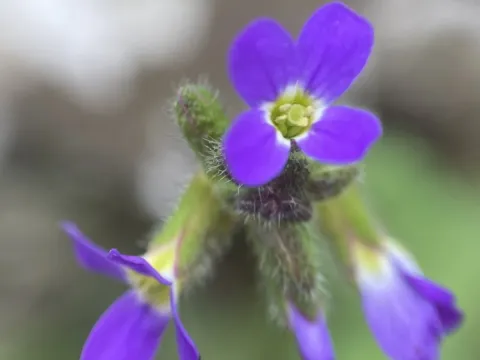
Spring rockcress
Arabis verna
Spring rockcress (Arabis verna) is an annual herbaceous plant belonging to the Brassicaceae family. Naturally occurring in the Mediterranean region, this plant prefers open, sunny locations such as rocky slopes and meadows, where it can thrive in well-drained, nutrient-poor soils.
What the section contains
Spring rockcress
The plant exhibits a compact growth habit, typically reaching heights between 10 and 30 centimeters. It features a basal rosette of leaves, while stem leaves are arranged alternately along the flowering stalks. The foliage is often pubescent, which helps the plant adapt to its natural arid environments.
During its spring blooming period, the plant produces distinctive raceme inflorescences. The flowers consist of four petals, typically displaying vibrant shades of purple, violet, or occasionally white, which makes it a popular choice for rock gardens and borders.
For successful cultivation, Spring rockcress requires full sun exposure. It is highly sensitive to shade, which can inhibit flower production and cause the plant to become leggy. Adequate spacing is essential to ensure proper airflow around the foliage, which reduces the risk of moisture-related issues.
The ideal soil for this species is sandy or gravelly with a neutral to slightly alkaline pH. Drainage is the most critical factor; waterlogging must be avoided at all costs, as the roots of Arabis verna are susceptible to rot if left in saturated soil for extended periods.
The primary threats to Spring rockcress include fungal diseases such as powdery mildew, which thrive in conditions of high humidity and poor air circulation. Overwatering or planting in poorly drained soil significantly increases the risk of these infections.
Insects, particularly flea beetles, are a significant concern as they can rapidly damage young leaves and growing points. Aphids and various caterpillar species may also feed on the plant, necessitating regular monitoring throughout the growing season.
Effective pest and disease management involves a combination of cultural practices and targeted treatments. Ensuring that the soil surface remains relatively dry and avoiding overcrowded planting patterns helps maintain a healthy environment that is resistant to common pathogens.
Weed control is essential, as weeds not only compete for resources but can also serve as hosts for various pests and diseases that affect the Brassicaceae family. Keeping the garden bed clean is a foundational step in preventative plant protection.
When chemical interventions are required, they should be applied judiciously. Using selective insecticides and fungicides can help manage outbreaks without causing undue stress to the plants or the surrounding ecosystem, provided that labels and application guidelines are strictly followed.