
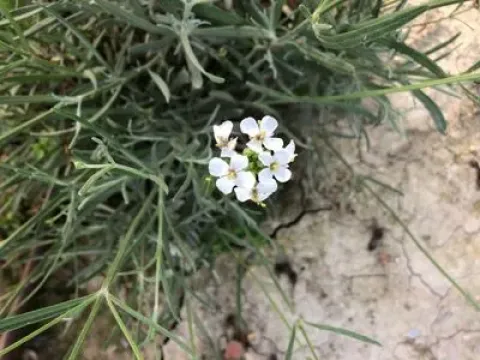
Stevenia
Stevenia
Stevenia is a genus of perennial herbs belonging to the Brassicaceae family. These plants are native to arid, rocky steppe environments, characterized by their high adaptability to nutrient-poor and dry soil conditions.
What the section contains
Stevenia
The cultivation of Stevenia requires well-drained, often calcareous, soils. The presence of stagnant water is extremely detrimental to the plant, as it causes root rot and quickly leads to the decay of the foliage and crown.
Botanically, the plant develops a basal rosette of leaves and produces upright flowering stems. Its root system is exceptionally robust, allowing the plant to penetrate rocky substrates in search of mineral nutrients and moisture.
In terms of climate, Stevenia is remarkably hardy. It thrives in regions with significant temperature fluctuations and high solar radiation, making it an excellent candidate for cultivation in open, exposed areas.
The maintenance of this plant is relatively low-intensive, provided that the soil structure mimics its natural habitat. Regular weeding is necessary in the early stages of growth to prevent competition from more aggressive weed species.
Cruciferous pests, especially flea beetles (Phyllotreta spp.), represent the primary insect threat to Stevenia. They feed on young leaves, creating small holes and hindering the development of the plant during its juvenile phase.
Fungal infections, such as those caused by Peronospora species, are common in environments with excessive air humidity. These diseases weaken the plant structure and can be fatal if left untreated during prolonged rainy seasons.
Soil-borne diseases such as clubroot represent a significant risk if the rotation cycles are not followed properly. Since Stevenia belongs to the Brassicaceae family, it is susceptible to pathogens that affect related commercial crops like cabbage or mustard.
Effective management strategies include the implementation of crop rotation to break the cycle of pest populations. Ensuring adequate spacing between plants also helps to mitigate the spread of airborne fungal pathogens.
Integrated pest management (IPM) practices, including the use of pheromone traps and physical barriers for young plants, provide a sustainable approach to protecting Stevenia from significant yield losses or plant mortality.