
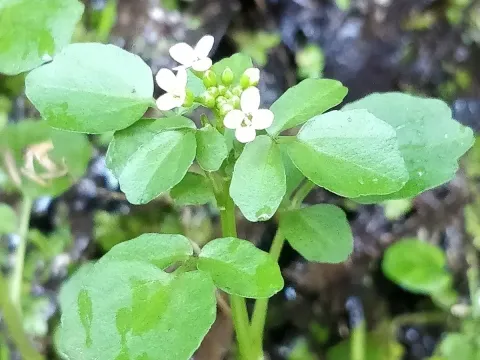
Sterile cress
Nasturtium sterile
Sterile cress is a hybrid plant within the Brassicaceae family that does not produce viable seeds. Therefore, all propagation for agricultural purposes must be carried out vegetatively using stem cuttings.
What the section contains
Sterile cress
Cuttings should be harvested from healthy, vigorous shoots and contain at least three nodes. These are placed into moist, nutrient-rich substrates or directly into shallow water channels to initiate rooting.
The ideal time for propagation is during the temperate spring months when daylight hours increase and temperatures are stable. This allows the plants to establish a strong root system before the summer heat.
Proper spacing between cuttings is essential to encourage lateral growth. Planting in a grid pattern with 20–25 cm intervals ensures that the plants have sufficient space to develop a thick mat of foliage.
During the establishment phase, it is crucial to ensure that the base of the cuttings remains constantly submerged or saturated with moisture. Once roots are established, the plant will grow rapidly.
This crop requires specific aquatic or semi-aquatic conditions to thrive. It performs best in running water with high oxygen content, which prevents stagnation and associated root diseases.
The ideal soil pH ranges between 6.5 and 7.5. Soils that are too acidic or too alkaline significantly hinder nutrient uptake, particularly iron and manganese, which are essential for healthy leaf color.
Light intensity significantly affects the quality and flavor of the leaves. While the plant can tolerate partial shade, full sun exposure is preferred, provided that the water temperature remains controlled.
The crop requires a steady supply of nutrients, primarily nitrogen and phosphorus. In controlled environments, liquid fertilization is often used to ensure that these elements are readily available in the water column.
Temperature management is key; the plant prefers cool to moderate temperatures. Excessive heat may cause the plant to stop growing and become bitter, making it unsuitable for market harvest.
Yield depends heavily on the frequency of harvesting and the availability of dissolved nutrients. With consistent care, multiple cuttings can be taken from a single plot throughout the season.
Regular pruning of the top growth actually stimulates the plant to produce more side shoots, effectively increasing the total biomass produced per square meter. This is a common practice in commercial systems.
Harvesting should be done using sharp blades to avoid crushing the stems. Crushed stems are more susceptible to rot and bacterial infection, which can quickly spread through the aquatic mat.
After the harvest, the crop should be cooled immediately to preserve freshness and texture. Post-harvest storage at low temperatures is critical for maintaining high market quality.
With optimal nutrient management and frequent harvesting, this crop can provide a very high yield compared to many other leafy greens grown in similar hydroponic or aquatic environments.
Pest management is focused on common Brassicaceae threats. Flea beetles are the most prominent pest, causing characteristic small holes in the leaves which drastically reduce market value.
Aphids can colonize the soft tips of the stems, causing stunted growth and leaf curling. Integrated pest management using biological controls is recommended for this sensitive aquatic plant.
Root rot and water molds are the primary disease threats, especially in areas with poor water circulation. Ensuring a steady flow or regular aeration of the water significantly reduces these risks.
Slugs and snails are major hazards in outdoor aquatic production. Physical barriers or the removal of surrounding vegetation can help protect the crop from these mollusks.
- Flea beetles
- Aphids
- Root rot
- Slugs and snails