
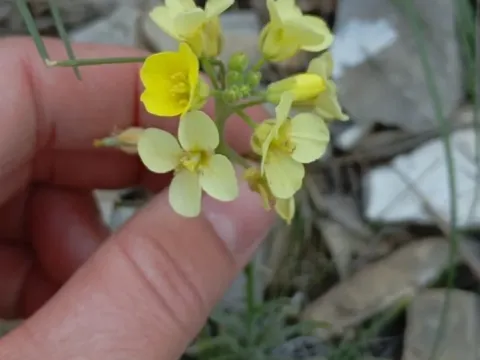
Sterigmostemum
Sterigmostemum
Sterigmostemum is a genus of herbaceous plants belonging to the Brassicaceae family. These plants are uniquely adapted to harsh, arid, and semi-desert environments, primarily found in the regions of Central and Western Asia.
What the section contains


Sterigmostemum
The botanical structure of Sterigmostemum includes a deep root system that allows the plant to reach moisture in deep soil layers, making it highly drought-tolerant. Its morphology is characteristic of xerophytes, designed to minimize transpirational water loss.
Optimal soil conditions for this genus involve well-drained, sandy, or light loamy soils. The plants thrive in alkaline to neutral pH environments and are notably resistant to high levels of soil salinity, which is a significant agronomic advantage.
Climatically, Sterigmostemum prefers regions with high solar radiation and significant temperature variations. While it can withstand extreme heat, it requires a moderate period of rainfall or moisture during the early spring vegetative cycle to establish successfully.
The plant demonstrates high adaptability to nutrient-poor soils. However, minimal inputs of phosphorus and potassium can enhance the reproductive phase, leading to higher seed yields in controlled agricultural settings.
Sowing should be timed for early spring, immediately after the risk of frost has passed and soil temperatures have reached approximately 8–10 degrees Celsius. Early planting is vital to complete the lifecycle before the onset of extreme summer heat.
The recommended seeding rate depends on local environmental factors and soil fertility. Precision drilling is preferred to ensure a uniform plant stand, with inter-row spacing typically ranging between 30 to 45 centimeters to manage weed pressure.
Seed depth is critical for this crop; it should be planted at a depth of 2 to 3 centimeters. Proper soil-to-seed contact is essential for germination in dry conditions, which is often achieved by light rolling after the seeding process.
Weed management during the early establishment phase is essential, as the seedlings of Sterigmostemum are relatively slow-growing compared to more aggressive weeds found in similar arid habitats.
Monitoring soil moisture levels during the first two weeks post-sowing is highly recommended. If moisture is critically low, a light irrigation pass can significantly increase the success rate of crop emergence.
The primary threats to Sterigmostemum include root rot diseases caused by poor drainage or excessive soil moisture. These pathogens thrive in waterlogged conditions and can lead to rapid crop failure if left unmanaged.
Pests such as flea beetles (Phyllotreta spp.) present a major challenge, especially during the seedling stage. They feed on the young cotyledons and leaves, which can severely stunt the plant's growth or lead to total seedling mortality.
Aphids can also pose a risk during the flowering phase by feeding on the sap of inflorescences. This activity can cause deformation and significantly reduce the overall seed harvest if not controlled through strategic insecticide application.
Effective disease management relies heavily on sound crop rotation practices. Avoiding the planting of Sterigmostemum in fields that recently supported other Brassicaceae crops prevents the buildup of host-specific pathogens in the soil.
Regular field scouting is necessary to detect pest infestations early. Integrated pest management (IPM) strategies, including the use of selective insecticides and the promotion of natural predators, are recommended to maintain environmental balance.