
Stribrny alyssum
Alyssum stribrnyi
Description
Growing requirements
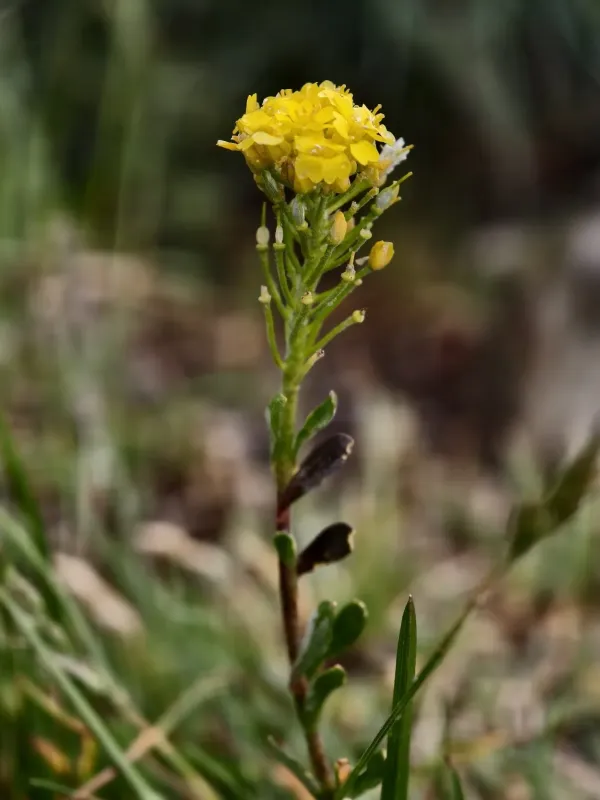
Stribrny alyssum (Alyssum stribrnyi) is a perennial herbaceous plant belonging to the Brassicaceae family. Originating from rocky environments, this species has adapted to survive in harsh, arid climates, making it an excellent candidate for low-maintenance landscaping.
The plant is characterized by its distinct silver-pubescent foliage, which creates a soft texture, and bright yellow flowers that bloom in dense clusters. These flowers are known for their strong honey-like fragrance, which is highly attractive to various pollinators in the garden.
To thrive, this plant requires well-drained, sandy or rocky soil with a neutral to alkaline pH. Good drainage is paramount, as the root system is highly susceptible to rot if exposed to persistent dampness, especially during the colder months of the year.
Full sun exposure is a non-negotiable requirement for Stribrny alyssum. When planted in areas with sufficient light, the plant remains compact and blooms profusely; conversely, shade-grown plants tend to become leggy and produce significantly fewer flowers.
In terms of agricultural and horticultural use, this species is ideal for rock gardens, stone walls, and xeriscaping. Its ability to thrive in poor, rocky soils makes it a valuable plant for erosion control on sunny slopes where other species might struggle.
Main diseases and pests
The primary threats to Stribrny alyssum include fungal diseases such as powdery mildew and root rot. These issues are almost always linked to excessive moisture levels or poor air circulation within the plant mass.
Maintaining a dry environment at the base of the plant is the best preventative measure against fungal infections. It is essential to ensure that the surrounding soil does not hold too much water and that the planting site is airy.
Pests such as flea beetles can be problematic during the early growth stages, as they feed on the foliage and can quickly degrade the plant's health. Applying organic or systemic insecticides at the first sign of infestation is recommended.
Caterpillars may also occasionally feed on the leaves, requiring regular monitoring of the plants throughout the season. Manual removal is often sufficient for small gardens if infestations are identified early.
Adopting proper gardening techniques, such as careful watering and maintaining sufficient spacing between individual plants, effectively minimizes the risk of pests and diseases, ensuring a healthy and vibrant display.