
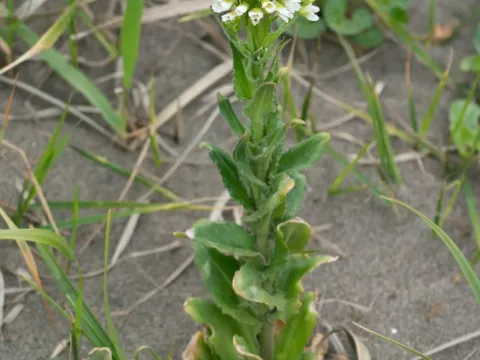
Steller's rockcress
Arabis stelleri
Steller's rockcress, scientifically known as Arabis stelleri, is a herbaceous perennial belonging to the Brassicaceae family, valued for its adaptability.
What the section contains
Steller's rockcress
Propagation is typically achieved through seeds sown in early spring in seed trays or by dividing established clumps during the dormant season.
When sowing in trays, seeds should be lightly covered with fine soil, as they require some light to germinate effectively in a cool environment.
Direct outdoor sowing is best performed in the autumn, allowing the natural freeze-thaw cycles to break seed dormancy before the arrival of spring.
Seedlings should be thinned out to maintain a spacing of approximately 25 centimeters to prevent overcrowding and ensure adequate airflow for the plants.
The plant thrives in full sun, requiring a location that receives at least six hours of direct light daily to maintain its compact growth habit.
Soil requirements are specific: the medium must be extremely well-drained, ideally sandy or gravelly, to prevent any accumulation of water around the crown.
Arabis stelleri is highly resistant to drought once established, making it a perfect candidate for alpine gardens, scree beds, and stone-walled gardens.
Minimal fertilization is required; however, an occasional balanced liquid fertilizer during the early spring can encourage a more prolific floral display.
Cold hardiness is a defining feature of this species, allowing it to withstand harsh winter conditions without the need for artificial protection.
The most significant threat to the health of Steller's rockcress is root rot, which is almost exclusively caused by poorly drained soils and excessive moisture.
Powdery mildew can become an issue during periods of high humidity, causing a white, dusty film to cover the foliage and reducing overall plant vigor.
Pests such as flea beetles can target the leaves, particularly during the early spring growth flush, necessitating vigilance and quick action if observed.
Effective management involves maintaining a clean garden environment, removing debris, and ensuring that no organic mulch touches the plant base.
- Good site drainage
- Adequate spacing
- Regular monitoring for foliage discoloration