
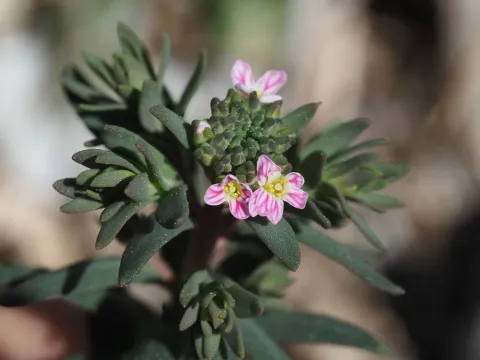
Aethionema monospermum
Aethionema monospermum
Sowing Aethionema monospermum is ideally performed in the autumn or early spring when soil temperatures allow for slow, natural germination. The seeds benefit significantly from stratification to break dormancy.
What the section contains
Aethionema monospermum
The seeds should be sown in well-drained, porous soil at a shallow depth of approximately 0.5 centimeters. A fine-textured top layer is essential to facilitate moisture contact without burying the seeds too deep.
Standard row spacing of 20 centimeters is recommended to ensure adequate ventilation and prevent the accumulation of moisture, which is a common cause of failure in Brassicaceae cultivation.
Professional growers often use a gravel mulch layer immediately after sowing. This technique mimics the natural scree habitat of the species, preventing erosion and keeping the collar of the plant dry.
Seedling care includes early weed management, as Aethionema is not highly competitive during the establishment phase. Once established, the crop requires minimal intervention and shows strong survival rates.
As a member of the Brassicaceae family, Aethionema monospermum thrives in rocky, lime-rich substrates. It prefers a pH balance that is neutral to slightly alkaline, reflecting its evolutionary origin.
Exposure to full sunlight is non-negotiable for this species. Any form of shading leads to weak, elongated growth and significantly reduces the density and quality of the biomass produced.
The plant is highly drought-tolerant once mature, possessing deep roots that tap into mineral-rich layers of the soil. It is well-suited to climates with distinct seasonal variations and cold winters.
Efficient drainage is the most critical agronomic factor. The root zone must remain aerated at all times; standing water is the primary cause of mortality in this culture during the active growth phase.
Mineral nutrition should be managed with caution. Excessive nitrogen application promotes succulent growth that is overly susceptible to frost and disease, counteracting the natural hardiness of the plant.
Fungal pathogens represent the most significant threat, particularly root rots and downy mildew. Maintaining high air circulation and strictly avoiding over-irrigation are the best preventative measures.
Common pests associated with the Brassicaceae family, such as flea beetles, pose a recurring risk during the early spring season. Integrated pest management strategies, including monitoring and timely intervention, are necessary.
Aphids can infest the inflorescences during the flowering stage, potentially impacting seed yield. Targeted insecticidal applications may be required if pest density exceeds acceptable thresholds.
Slugs and snails can cause mechanical damage during wet seasons, particularly to young, tender tissues. Protective physical barriers are often more effective than chemical treatments for this type of plant.
Crop rotation remains the gold standard for avoiding soil-borne pathogens. Planting Aethionema in fields previously occupied by other Brassicaceae species is discouraged to minimize the risk of disease carryover.