
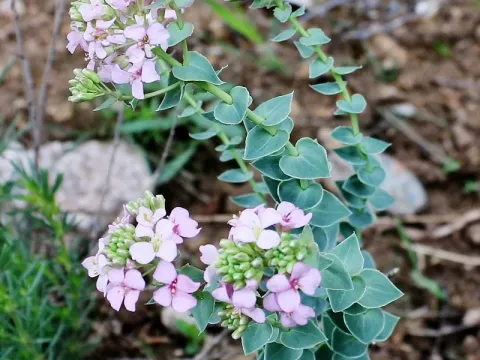
Aethionema cordatum
Aethionema cordatum
Aethionema cordatum is primarily propagated through seeds or division of mature clumps. Sowing in open ground is best performed in spring after the frost threat has passed.
What the section contains
Aethionema cordatum
For indoor propagation, seeds should be sown in late winter. Use a well-draining, sandy seed-starting mix and barely cover the seeds with sand to ensure adequate light exposure for germination.
Seedlings usually emerge within two to three weeks under consistent temperatures. Once two sets of true leaves develop, move the seedlings into individual small pots to strengthen their root systems.
Transplanting into the permanent garden location should occur in late spring. Spacing of at least 20 centimeters is necessary to allow for optimal foliage expansion and airflow.
Always ensure the planting area is prepared with a coarse substrate to facilitate immediate water drainage, simulating the plant's natural rocky, mountain environment.
As a member of the Brassicaceae family, Aethionema cordatum requires conditions that mimic its alpine origin. It thrives in open, sunny locations with minimal competition from taller plants.
The soil must be alkaline, gritty, and exceptionally well-drained. Heavy soils that retain moisture will inevitably lead to root rot and the rapid decline of the plant.
This species is highly drought-tolerant and requires very little supplemental irrigation. Water should only be provided during periods of extreme, prolonged heat to prevent dehydration.
Full sun is essential for maintaining the compact growth habit of the plant. If grown in partial shade, the stems will become leggy and the overall floral performance will decrease significantly.
Minimal fertilization is required for this plant. Excess nutrients, particularly nitrogen, are harmful and can cause the plant to grow too rapidly, becoming weak and susceptible to breakage.
Root rot is the most common issue for this species, primarily caused by excessive moisture and poor drainage. Proper site selection and gravel mulch are the best preventive measures.
Powdery mildew can occur during seasons with high humidity and poor air circulation. Improving spacing and ensuring the leaves remain dry during irrigation help mitigate this risk.
Crucifer flea beetles are the most frequent insect pests. They feed on the leaves, leaving small, characteristic holes that can weaken the plant over time.
Slugs and snails may occasionally feed on young growth, especially in damp weather conditions. Physical barriers or organic deterrents are usually sufficient to manage these pests.
Regular monitoring of the foliage and crown health is vital to detect early signs of pest infestation or fungal disease before they compromise the entire plant colony.