
Alpine alyssum
Alyssum alpestre
Description
Sowing dates
Alpine alyssum (Alyssum alpestre) is a perennial herbaceous plant belonging to the Brassicaceae family. It is native to the mountainous regions of Europe and is well-adapted to harsh, rocky terrain.
Sowing should be performed in early spring once the threat of heavy frost has passed, or in late autumn for natural vernalization. Seeds should be sown on the soil surface as they require light for germination.
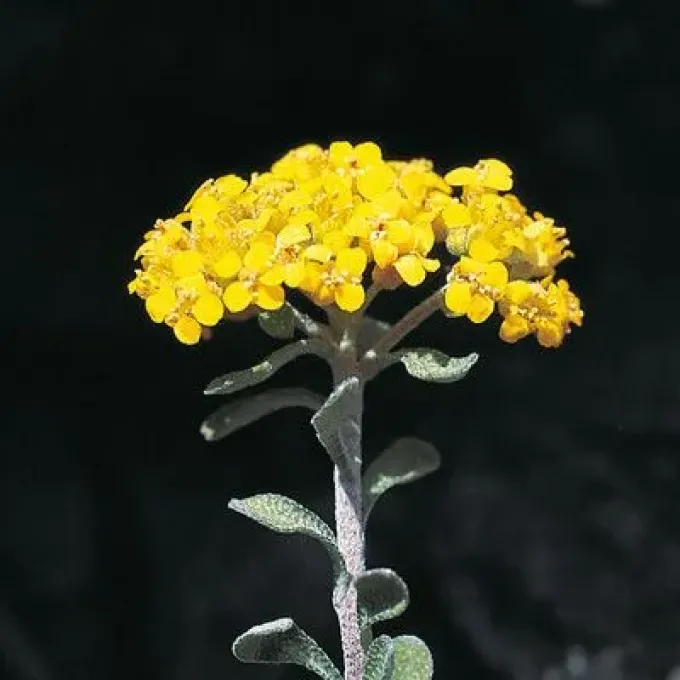
The plant features small, grayish-green leaves covered in fine hairs, which help the plant retain moisture, and produces clusters of vibrant yellow, fragrant flowers in late spring.
Agricultural practices for this species focus on providing poor, well-draining soils that mimic its natural alpine habitat. High nutrient content in the soil often leads to leggy, unhealthy growth patterns.
When establishing new plantings, it is essential to provide adequate spacing, approximately 20 to 30 cm, to ensure that each plant receives enough light and air circulation for healthy development.
Growing requirements
Alpine alyssum thrives in full sun exposure. It is highly intolerant of shade and will lose its dense, mat-forming habit if planted in areas with limited direct sunlight.
The soil must be alkaline and highly permeable. Rocky, sandy, or gritty substrates are preferred to ensure that water drains rapidly, preventing saturation of the root system.
The plant is exceptionally drought-tolerant once established. Supplemental irrigation is only necessary during extended heatwaves or prolonged dry spells in the growing season.
Minimal fertilization is required for this species. Over-fertilization, especially with nitrogen, can reduce flowering intensity and make the plants more susceptible to diseases.
Pruning is recommended immediately after the primary flowering cycle concludes. Cutting back the stems helps maintain a compact shape and encourages potential repeat blooms.
Main diseases and pests
Root rot is the most common threat to Alpine alyssum, usually caused by heavy, poorly draining soils or excessive watering that keeps the soil consistently moist.
Crucifer flea beetles can be a nuisance during the early stages of growth, causing small pits or shot-holes in the foliage, which can weaken young seedlings significantly.
Powdery mildew may occur in regions with high humidity and poor ventilation. Keeping the area around the plants free of debris and ensuring good airflow is essential for prevention.
Caterpillars, such as those of the cabbage white butterfly, can occasionally feed on the leaves. Manual removal or the use of approved biological pesticides is effective if infestations occur.
To mitigate health risks, maintain a clean growing environment, avoid overhead watering, and select planting sites that allow for rapid soil drying after rainfall.