
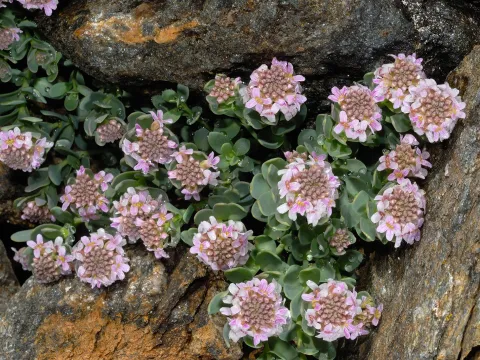
Aethionema thomasianum
Aethionema thomasianum
Sowing Aethionema thomasianum is best performed in late autumn or very early spring to ensure the seeds undergo natural cold stratification. This process is essential for breaking seed dormancy and achieving consistent germination.
What the section contains
Aethionema thomasianum
The seeds should be sown on the surface of a well-draining, gritty seed-starting mix. They require light to germinate, so they should be covered only by a very thin layer of fine sand or grit.
Maintain the pots in a cool environment, ensuring the soil remains moist but not saturated. Germination can be slow and irregular, sometimes extending over several weeks.
Once seedlings have developed their first pair of true leaves, they can be carefully transplanted into individual small pots. Avoid deep planting, as the seedlings are susceptible to damping-off disease.
Establishing the plants in their permanent location is best done when they are still small, as older specimens develop deep taproots that resent being disturbed during transplanting.
Aethionema thomasianum is a member of the Brassicaceae family, originating from mountainous limestone regions. It is characterized by its woody base and dense, succulent-like foliage, which makes it a perfect choice for rock gardens.
The plant demands full sun exposure to thrive. Insufficient light leads to weak, elongated growth and significantly reduced flowering, which diminishes the ornamental impact of the species.
Soil requirements focus on drainage. The ideal growing medium is a mineral-rich, stony, or sandy soil with a neutral to slightly alkaline pH. Clay-heavy soils are generally unsuitable without significant amendments.
Watering needs are minimal once the plant is established. As an alpine native, it is well-adapted to rocky crevices where water drains away rapidly, preventing stagnant moisture around the crown.
Regarding climate, the plant is hardy and adapted to significant temperature fluctuations. However, it requires protection from prolonged winter dampness, which can often be more damaging to its survival than frost itself.
The primary threat to Aethionema thomasianum is root rot caused by poor soil drainage. Ensuring that the crown of the plant is surrounded by gravel or grit helps keep the foliage dry and prevents decay.
Pests such as aphids may attack the flower buds during spring, leading to stunted growth. Regular inspection and the use of insecticidal soaps can manage these populations without harming the plant.
Flea beetles are a common nuisance for Brassicaceae members, creating small holes in the foliage. Keeping the surrounding area free of weeds and using row covers on young plants can mitigate this issue.
Slugs and snails can cause significant damage to young plants during humid weather. Utilizing organic slug pellets or physical barriers like copper tape can provide effective protection in a rockery.
Bacterial soft rot can occur if the plant is subjected to high humidity and poor air circulation. Proper spacing between plants and maintaining a clean, debris-free planting site are vital for prevention.