
Aethionema retsina
Aethionema retsina
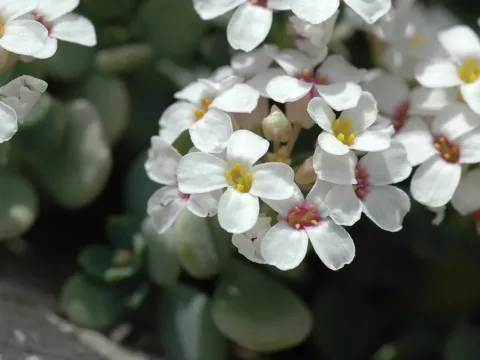
Aethionema retsina is a compact perennial subshrub belonging to the Brassicaceae family. In the wild, this species is endemic to Greece, primarily growing on limestone substrates in mountainous regions.
What the section contains
Aethionema retsina
The crop is characterized by a cushion-like growth habit, reaching a height of no more than 10–15 centimeters. The leaves have a glaucous, gray-green tint, providing the plant with decorative value even during periods without active flowering.
The plant is highly photophilous and requires open, sunny areas for optimal development. If light is insufficient, the stems become leggy, losing the characteristic density of the "cushion," and flowering becomes less abundant.
It prefers poor, loose, and well-drained soils with a high calcium content. Stagnant moisture in the root zone is fatal for this species, so on heavy clay soils, it is necessary to create a thick drainage layer.
Aethionema retsina possesses high drought tolerance and is adapted to the sharp temperature fluctuations typical of the alpine climate. The plant overwinters successfully provided it is not subjected to prolonged waterlogging in the spring.
Sowing is typically conducted in the spring when the soil temperature reaches 10–15 degrees Celsius. Seeds are sown into prepared light substrate without deep burial, as light is required for germination.
Propagation by cuttings is also possible during the summer, which allows the preservation of the mother plant's varietal traits. Cuttings are rooted in sandy substrate under light cover to maintain humidity.
When using the seedling method, young plants require hardening before being transplanted into open ground. Pricking out should be done carefully to avoid damaging the root system, which is sensitive to disturbance.
The spacing between plants when planting in a permanent location should be at least 20–25 centimeters to ensure adequate air circulation.
After planting, the plants require moderate watering until they are established, after which watering should be reduced to a minimum, allowing the top layer of soil to dry out.
The main threat to the crop is root rot caused by excessive soil moisture or stagnant water. Prevention involves selecting a site with excellent drainage.
Pests such as aphids can affect young shoots during the active growth period. Regular inspection of the plants allows for timely detection of issues and the application of insecticides.
The plant may suffer from slugs, especially during rainy summers. To protect the plantings, it is recommended to scatter barrier materials around the bushes or use traps.
Improper wintering, accompanied by icing in the presence of moisture, can lead to rot at the root collar. Using dry cover is recommended to protect against winter precipitation.
Adherence to agricultural practices, namely maintaining alkaline soil pH and avoiding excessive nitrogen fertilization, significantly enhances the plant's immunity.