

Reference · Crops
Lettuce
Lactuca
Lettuce seeds are sown directly into the soil or started as transplants to ensure early crop maturity. In temperate climates, the optimal sowing period ranges from April to August, depending on the specific cultivar requirements.
9
items
What the section contains
 Lettuce
Lactuca sativa L.
120 products
Lettuce
Lactuca sativa L.
120 products
 Prickly lettuce
Lactuca serriola L.
9 products
Prickly lettuce
Lactuca serriola L.
9 products
 Asparagus lettuce
Lactuca sativa L. var. angustana L. H. Bailey
Asparagus lettuce
Lactuca sativa L. var. angustana L. H. Bailey
 Blue lettuce
Lactuca tatarica (L.) C. A. Mey.
Blue lettuce
Lactuca tatarica (L.) C. A. Mey.
 Blue lettuce
Lactuca tatarica (L.) C. A. Mey. subsp. pulchella (Pursh) Stebbins
Blue lettuce
Lactuca tatarica (L.) C. A. Mey. subsp. pulchella (Pursh) Stebbins
 Butterhead lettuce
Lactuca sativa L. var. capitata L.
Butterhead lettuce
Lactuca sativa L. var. capitata L.
 Indian lettuce
Lactuca indica L.
Indian lettuce
Lactuca indica L.
 Leaf lettuce
Lactuca sativa L. var. crispa L.
Romaine lettuce
Lactuca sativa L. var. longifolia Lam.
Leaf lettuce
Lactuca sativa L. var. crispa L.
Romaine lettuce
Lactuca sativa L. var. longifolia Lam.
Marketplace
Products in this section · 12



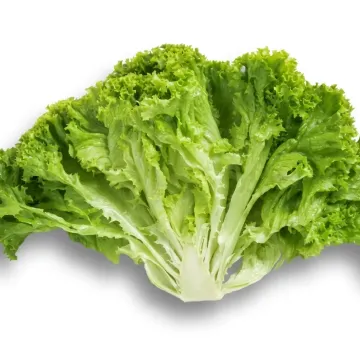

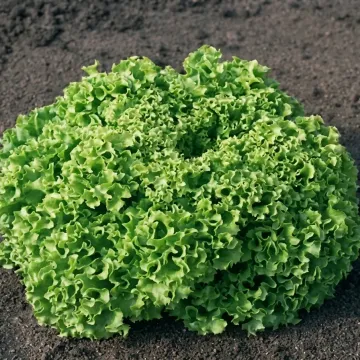

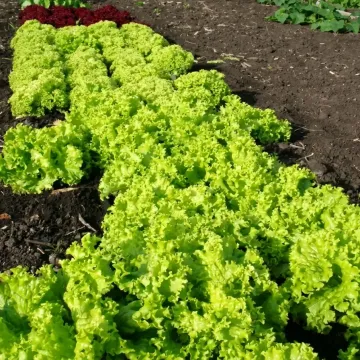
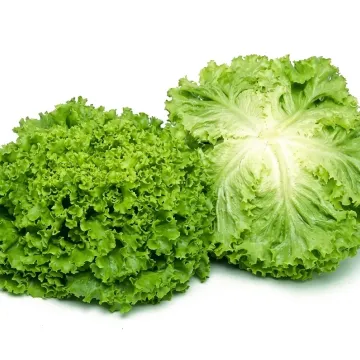
Lettuce
For continuous supply, growers practice successional planting every 10 to 14 days throughout the season. Seeds should be sown at a depth of 1–1.5 cm, as they are small and require good contact with moist soil to germinate successfully.
In hot weather conditions, pre-soaking seeds or using pelleted seed material helps improve germination rates. It is essential to maintain consistent moisture during the germination phase to prevent the formation of soil crusting.
Indoor production allows for year-round lettuce cultivation with the aid of supplemental lighting. This controlled environment enables growers to manage growth rates precisely, especially during the winter months.
Agronomists carefully select varieties based on photoperiod sensitivity, prioritizing bolt-resistant cultivars for long-day conditions to maximize harvest window and foliage quality.
Lettuce belongs to the Asteraceae family and is a cool-season crop, performing best at temperatures between 15 and 20 degrees Celsius. Temperatures exceeding 25 degrees often trigger early bolting and flowering.
The crop has high light requirements; inadequate lighting results in etiolation (stretching) and reduced leaf quality. Well-lit, sunny sites with protection from strong winds are considered ideal for development.
The soil must be fertile with a pH range of 6.0 to 7.0 for optimal nutrient uptake. Lettuce is particularly sensitive to soil structure and requires well-drained, loose soil for effective root system penetration.
Consistent irrigation is vital because of the crop's shallow root system, which makes it prone to moisture stress. However, excessive moisture without adequate ventilation can lead to fungal issues.
Nitrogen-based fertilizers are applied during early vegetative stages to stimulate growth. Growers typically halt fertilization several weeks before harvest to prevent the accumulation of nitrates in the leaves.
Lettuce yield varies significantly depending on the variety and cultivation technology. On average, yields range from 2 to 5 kilograms per square meter under standard management practices.
In high-tech hydroponic systems, yields can be substantially higher due to optimized plant density and nutrient delivery. These systems allow for precise environmental control throughout the growth cycle.
Loose-leaf varieties typically mature faster, providing several crop cycles per season compared to head-forming varieties. Heading types require longer periods for development and achieve higher individual plant mass.
Total harvest volume depends on plant weight, which usually ranges between 150 and 500 grams. Timing the harvest is critical to ensure plants are gathered at peak tenderness before quality degradation occurs.
Managing planting density is essential to balance overall production volume with individual plant size, preventing overcrowded crops that lead to stunted development and poor air circulation.
The primary threats to lettuce crops include fungal diseases such as powdery mildew, grey mold, and white mold, all of which thrive in high humidity conditions. Effective moisture management is key to disease prevention.
Viral infections, such as lettuce mosaic virus, can significantly reduce productivity. These are commonly transmitted by insect vectors, particularly aphids, which feed on the foliage.
- Aphids and leafhoppers — major pests that extract plant sap and transmit viral diseases.
- Slugs and snails — cause physical damage by consuming leaf tissue, making the crop unmarketable.
- Root rot — typically occurs due to waterlogging or improper soil drainage.
- Downy mildew — appears as characteristic lesions on leaf surfaces, reducing commercial value.
Integrated pest management, including crop rotation and weed control, is essential for mitigating risks. Using insect-proof netting provides a physical barrier against common field pests.
Due to the short growth cycle, pesticide usage is heavily restricted. Growers prefer biological controls and environmental modifications to ensure the safety and quality of the final vegetable product.
Harvesting commences once the plants reach the desired rosette size or develop firm heads. It is standard practice to harvest during the early morning hours when plant turgor pressure is at its maximum.
Large-scale operations often utilize mechanical harvesting, though extreme care is required to avoid bruising the delicate leaves. Lettuce is highly perishable and sensitive to handling damage.
Post-harvest, the product should be cooled immediately to reduce metabolic activity and moisture loss. Ideal storage conditions require temperatures near 0 to 2 degrees Celsius with high humidity.
Depending on market demands, lettuce is sold either as whole heads or as pre-cut leaf mixes. Grading for size, cleanliness, and absence of defects is a standard post-harvest preparation step.
Delayed harvesting leads to bitterness and tougher leaf texture as the plant shifts energy toward seed production. Timely harvest is the most significant factor in maintaining flavor and market appeal.