
Lesser burdock
Arctium minus
Description
Sowing dates
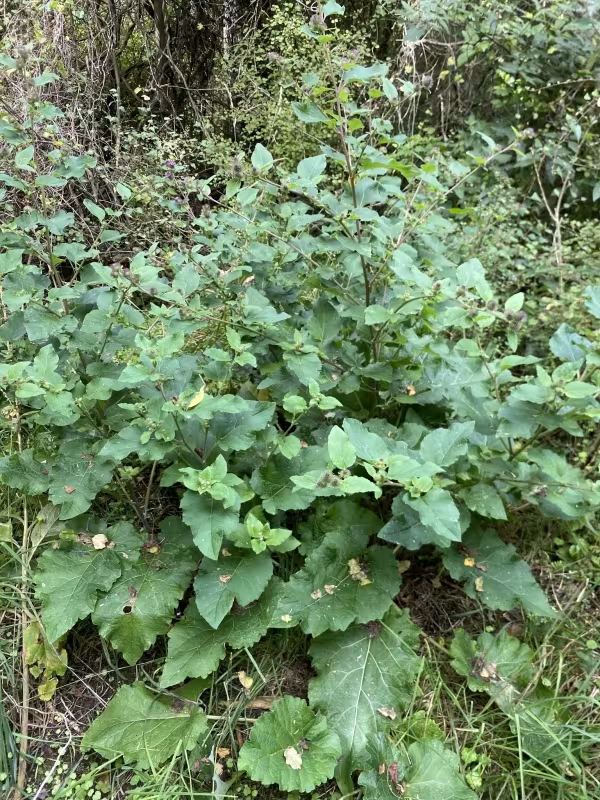
Lesser burdock is a biennial herbaceous plant belonging to the Asteraceae family. During its first year, the crop develops a powerful rosette of basal leaves and a deep taproot, while in the second year, it produces a flowering stem.
The plant reproduces primarily through seeds that ripen in late summer or autumn. The optimal time for sowing seeds in controlled conditions is late autumn or winter, as the seeds require stratification to ensure successful germination in spring.
When cultivating in plots, the soil must be prepared in advance, ensuring a loose structure to a depth of at least 30-40 centimeters, which is crucial for the proper formation of the root crop. Seeds are sown in rows with spacing of about 60 centimeters.
It is important to note that Lesser burdock spreads actively via self-seeding, so in commercial fields, the dispersal of seeds from prickly burrs should be controlled. Seedlings emerge at soil temperatures of 6-8 degrees Celsius.
Planting density should be approximately 4-6 plants per square meter to ensure adequate nutritional area, which prevents plant stunting and promotes biomass accumulation.
Growing requirements
The crop prefers fertile, deeply cultivated loamy or sandy-loam soils with a neutral or slightly alkaline pH. Waterlogging is unacceptable, as it leads to rapid decay of the root system.
The plant is light-loving, but can tolerate partial shading during early growth stages. In temperate climates, Lesser burdock shows high winter hardiness and adaptability to temperature fluctuations.
An important requirement is the absence of high salt concentrations in the soil solution. Fertilizers should be applied during autumn tillage, preferably organic components like humus or compost.
Lesser burdock is demanding regarding soil aeration. Soil compaction leads to root deformation, which reduces product quality and complicates subsequent mechanized harvesting.
Irrigation should be moderate: excessive moisture during the rapid leaf growth phase can provoke fungal diseases of the leaf blades.
Yield
The yield of burdock is estimated by the output of fresh root mass, which, when agricultural standards are met, reaches 15-20 tons per hectare. In the second year, the biomass of the aerial part increases significantly.
Economic use includes the application of roots as raw material for the pharmaceutical and cosmetic industries. Young shoots and leaves are also used in food in regions with traditions of their consumption.
The yield of dried raw material typically accounts for about 25-30% of the fresh root weight. Drying should be carried out in ventilated rooms at temperatures not exceeding 40-50 degrees.
Crop quality depends directly on harvest timing: the maximum accumulation of biologically active substances in the root occurs by the end of the first year of vegetation before tissue lignification begins.
The use of modern seeds and balanced fertilization can increase the yield of commercial roots by 15-20% compared to wild populations.
Main diseases and pests
The main pests of the crop are leaf-eating insects, particularly various species of weevils and bugs, which can damage the leaf rosette at early stages.
Diseases often manifest as powdery mildew, which develops under high humidity and dense planting. When affected by the fungus, the leaf is covered with a white coating, reducing photosynthetic activity.
Root rots are the most dangerous, as they affect the main marketable part of the plant. Prevention involves crop rotation and avoiding soil waterlogging.
To combat pests on an industrial scale, integrated protection systems are used, including the use of biological preparations and timely weeding between rows.
- Powdery mildew
- Root rot
- Weevils
- Aphids
Harvesting
Harvesting of Lesser burdock roots is carried out in the autumn of the first year of life. During this period, the root crop accumulates the maximum amount of inulin and other polysaccharides required for industrial processing.
To extract roots from the soil, mechanical diggers or potato harvesters are used, ensuring minimal damage to the structure of the main taproot.
The harvested yield must be thoroughly cleaned of soil and small rootlets, then washed in running cold water to remove impurities.
After washing, the roots are cut into pieces 10-15 centimeters long. In this form, the material dries faster and retains its beneficial properties during long-term storage.
Harvesting the aerial part for medicinal purposes is carried out during the flowering period, but the main target of cultivation remains the root, which requires careful primary processing.