
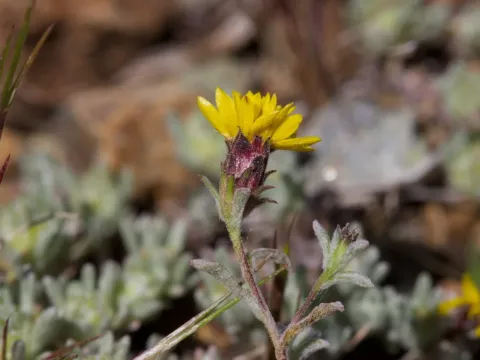
Lessingia
Lessingia
Lessingia is a genus of herbaceous plants within the Asteraceae family, primarily native to California. Seeds typically germinate during the early spring season following the winter rainy period.
What the section contains


Lessingia
In cultivation, seeds should be sown on the surface of well-draining soil mixes, as they require light exposure for successful germination and are sensitive to burial depth.
Proper spacing is crucial to prevent seedling competition and to ensure that each individual plant has sufficient access to air circulation, which is vital for early development.
After sowing, it is essential to provide consistent but light moisture, as seeds are prone to rotting if the substrate remains saturated for an extended period of time.
Gradual acclimatization is recommended before transplanting seedlings to their final location, ensuring they are protected from extreme winds or late-season frost events.
The genus thrives in open, sun-exposed environments. It requires significant solar radiation for optimal metabolic processes and to encourage healthy, compact growth patterns.
Soil composition should lean towards sandy or loamy textures with excellent drainage. Lessingia is highly sensitive to poorly drained soils that can lead to rapid root mortality.
The plant is drought-tolerant, adapted to Mediterranean-style climates characterized by long, dry summers, making it suitable for xeriscaping or low-water usage garden designs.
Nutrient requirements are relatively low; the plants are adapted to poor soils and do not require heavy fertilization, which can sometimes produce overly succulent and weak growth.
pH preferences are generally neutral, though the plant can adapt to slightly acidic or alkaline conditions depending on the specific species within the genus.
The most significant threat to Lessingia is root and crown rot, which is almost always a result of excessive irrigation or poorly draining soil conditions during the growth cycle.
Aphids represent a common pest threat, particularly during the active growing season, attacking young terminal shoots and potentially causing stunted development and leaf distortion.
Powdery mildew is a common fungal threat when plants are subjected to high humidity and stagnant air, which can be mitigated by ensuring proper planting distance and ventilation.
Spider mites may appear in environments with extremely low humidity and high heat, feeding on the undersides of leaves and leading to chlorosis and eventual necrosis.
Weed competition is a major obstacle, as the plant possesses a relatively slow initial growth rate and can easily be outcompeted by invasive weeds in its native habitat.