
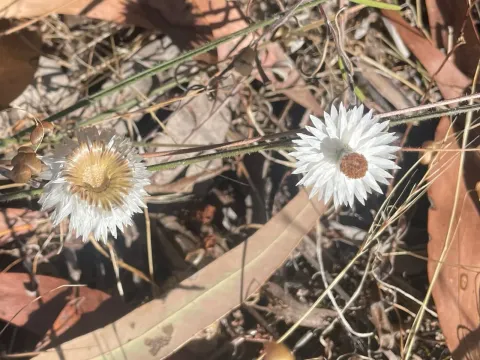
Helichrysum
Helichrysum Mill. corr. Pers.
Sowing Helichrysum seeds outdoors is best performed in April or May, once the soil has sufficiently warmed up. Since the seeds are extremely small, they should not be buried deeply but rather lightly pressed into the surface or covered with a very thin layer of substrate.
What the section contains
 Helichrysum amorginum
 Boiss. & Orph.
Helichrysum amorginum
Helichrysum amorginum Boiss. & Orph.
 Helichrysum arenarium
 (L.) Moench
Helichrysum arenarium
Helichrysum arenarium (L.) Moench
 Helichrysum italicum
 (Roth) Gussone
Helichrysum italicum
Helichrysum italicum (Roth) Gussone
 Helichrysum splendidum
Hybrid of Helichrysum italicum and Helichrysum panormitanum
hybrids between Helichrysum italicum (Roth) G. Don and Helichrysum panormitanum Tineo ex Guss.
Helichrysum splendidum
Helichrysum splendidum
Hybrid of Helichrysum italicum and Helichrysum panormitanum
hybrids between Helichrysum italicum (Roth) G. Don and Helichrysum panormitanum Tineo ex Guss.
 Italian hybrid everlasting
Helichrysum panormitanum x doerfleri x italicum
Italian hybrid everlasting
Helichrysum panormitanum x doerfleri x italicum
 Licorice plant
Helichrysum petiolare Hilliard & B. L. Burtt
Licorice plant
Helichrysum petiolare Hilliard & B. L. Burtt
 Panormitan immortelle
Helichrysum panormitanum Tineo ex Guss.
Panormitan immortelle
Helichrysum panormitanum Tineo ex Guss.
Helichrysum
For earlier production and uniform seedling development, a greenhouse propagation method is recommended. Seeds should be sown indoors in March and pricked out into individual pots once the first two true leaves have developed to ensure strong root systems.
Transplanting hardened-off seedlings to their final location is carried out at the 4–6 leaf stage, after the danger of frost has passed. A planting spacing of 30x40 cm is considered optimal, providing adequate nutrition and space for individual plants to thrive.
Maintaining constant soil moisture is critical during the germination period to ensure successful emergence. Using lightweight, well-draining soil mixtures helps prevent seed decay and promotes uniform growth across the entire planting area.
Temperature requirements for optimal germination range between 18–20 degrees Celsius. With proper attention to these parameters, seedlings usually emerge within 10–14 days, allowing for precise scheduling of subsequent agricultural operations.
Helichrysum belongs to the Asteraceae family and is an incredibly sun-loving crop that requires open, well-lit areas. Partial shading often results in leggy stems, reduced flowering intensity, and a noticeable loss of the plant's characteristic vibrant color.
The crop is not demanding regarding soil fertility and thrives on sandy, gravelly, or loam soils. The most critical requirement is good drainage, as stagnant water and over-saturation quickly lead to root rot and complete plant mortality.
Helichrysum exhibits high drought resistance due to its deep taproot system. However, for maximum commercial output during the active growth phase, moderate and regular irrigation is necessary, avoiding extreme drying out of the topsoil layer.
The optimal pH range for Helichrysum is neutral (pH 6.5–7.0). Heavy clay soils should be amended with sand or gravel to improve aeration and water permeability before any planting occurs, ensuring a favorable environment for root development.
This plant is resilient to temperature fluctuations but remains sensitive to prolonged high humidity. In regions with frequent rainfall, ensuring adequate air circulation around the plants is essential to prevent fungal infections and maintain overall vigor.
Yield depends heavily on the timing of flower harvesting and overall plantation management. The primary commercial product consists of flower heads harvested at the semi-open stage, as this timing ensures the highest concentration of active compounds.
With an intensive cultivation strategy, farmers can expect a yield of 5 to 10 centners of dry raw material per hectare. These figures vary significantly based on the specific variety, planting density, and the climatic conditions of the growing season.
Regular cutting of flower stems throughout the summer stimulates the production of new shoots and extends the flowering period significantly. This allows for multiple harvests, which greatly increases the total biomass productivity of each individual plant.
To sustain high yields over several consecutive years, applying complex mineral fertilizers after each major harvest is recommended. This practice compensates for nutrient extraction from the soil and supports continued root and vegetative health.
Harvest quality is determined by the preservation of color and the integrity of the flower heads after drying. High-quality products should be dense, free from mold signs, and thoroughly dried, ensuring long-term shelf stability and premium market value.
Common diseases affecting Helichrysum include Fusarium wilt and powdery mildew. These fungal pathogens thrive in conditions of high humidity or poor air circulation, which often occurs in overcrowded plantings or areas with inadequate ventilation.
Pests that frequently impact the crop include aphids and various leaf-chewing insects. In the event of an infestation, appropriate biological or chemical insecticides should be applied, with strict adherence to pre-harvest safety intervals.
Root rot represents a significant risk when irrigation practices are flawed. To prevent this, growers must avoid waterlogging fields and select sites with low groundwater levels and excellent natural drainage properties for their plantations.
Preventative measures should begin with the selection of certified disease-free seeds and the implementation of a proper crop rotation system. Rotating the crop to a different field every 3–4 years is essential to prevent the buildup of soil-borne pathogens.
Weeds are strong competitors for Helichrysum during the early stages of establishment. Regular weeding and inter-row cultivation are vital tasks to ensure that young plants have sufficient access to sunlight and available soil nutrients for healthy growth.
Harvesting should be initiated when the flower heads are only partially open, with the central florets still tightly closed. This stage is crucial as it prevents the flowers from shattering after drying and ensures their long-term aesthetic and medicinal value.
Harvesting should be done in dry, sunny weather once all surface dew has evaporated. High moisture levels on the flowers during collection can cause quality degradation, mold growth, and a loss of marketability during the drying process.
Cut stems should be tied into small bundles and hung upside down in a well-ventilated, shaded area. Avoid direct sunlight during the drying process, as UV exposure causes pigments to fade and the petals to lose their natural color vibrancy.
The drying process is considered complete when the stems feel rigid and the flower heads are brittle to the touch. In a warm and dry environment, this process typically takes anywhere from a few days to two weeks depending on humidity.
Dried Helichrysum must be stored in dry, dark conditions with low humidity. Using airtight containers helps protect the raw material from pests and ambient moisture, ensuring that the product maintains its quality throughout the storage period.