

Reference · Crops
Hemp-agrimony
Eupatorium L.
The sowing of Eupatorium is typically conducted in autumn or early spring following a stratification period. The seeds require consistent substrate moisture to ensure successful germination and seedling establishment.
8
items
What the section contains
 Common boneset
Eupatorium perfoliatum L.
Common boneset
Eupatorium perfoliatum L.
 Crofton weed
Eupatorium adenophorum Spreng.
Crofton weed
Eupatorium adenophorum Spreng.
 Eupatorium buniifolium
 Hook. & Arn.
Eupatorium buniifolium
Eupatorium buniifolium Hook. & Arn.
 Fortune's Eupatorium
Eupatorium fortunei Turcz.
Fortune's Eupatorium
Eupatorium fortunei Turcz.
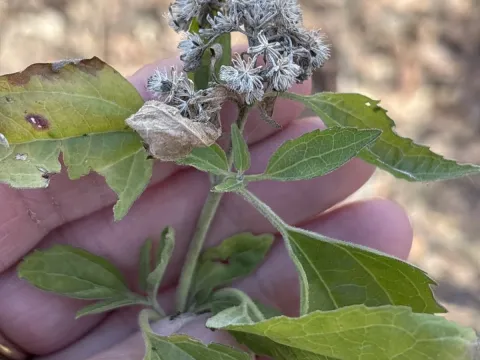
 Hemp-agrimony
Eupatorium cannabinum L.
Hemp-agrimony
Eupatorium cannabinum L.
 Japanese eupatorium
Eupatorium japonicum Thunb.
Japanese eupatorium
Eupatorium japonicum Thunb.
 Joe Pye weed
Eupatorium purpureum L.
Siam weed
Eupatorium odoratum L.
Joe Pye weed
Eupatorium purpureum L.
Siam weed
Eupatorium odoratum L.
Marketplace
Products in this section · 1
Hemp-agrimony
When using a nursery method, seeds are sown in March in prepared containers. It is essential to use deep containers to accommodate the rapid development of the root system characteristic of this genus.
Transplanting into the field occurs after the last risk of frost, usually in late May. Spacing should be approximately 50–60 centimeters between plants to allow for sufficient air circulation and vegetative growth.
As a vigorous perennial, the plant spreads through rhizomes. Plantations usually require division or thinning every 3–4 years to maintain productivity and prevent the overcrowding of the field.
Vegetative propagation via cuttings is highly effective. Young stems, collected in early summer, root reliably in greenhouse conditions when maintained at 20–22 degrees Celsius.
The culture thrives in well-lit areas with the possibility of light afternoon shade. While highly adaptable, the plant performs best in locations that provide consistent environmental conditions throughout the growing season.
Soils must be rich in organic matter, moisture-retentive, and have a neutral or slightly acidic pH. The plant reacts poorly to sandy soils where nutrients are easily leached and moisture levels are insufficient.
Water requirements are significant; regular irrigation is necessary during the active growing season. However, the plant requires good drainage, as waterlogged soil can lead to root system degradation.
The plant is native to temperate climates and demonstrates excellent winter hardiness, surviving harsh winter conditions without the need for additional protective cover in most regions.
For intensive cultivation, the application of compost or humic-based fertilizers is recommended. Balanced NPK fertilizers should be applied at the beginning of the season to stimulate stem strength and vegetative development.
The economic value of Eupatorium lies in the production of medicinal raw materials, including both foliage and rhizomes. Maximum biomass yield is typically achieved between the third and fifth year after planting.
Average productivity ranges from 2 to 4 tons of dry raw material per hectare under optimal agronomic practices. Harvest timing is critical, occurring during the mass flowering phase for maximum phytochemical potency.
Beyond medicinal use, Eupatorium is valued in landscaping for its long blooming period. This demand supports a profitable market for high-quality, nursery-grown starter plants.
The quality of processed material depends on strict adherence to drying protocols. Drying should be conducted in well-ventilated areas at temperatures not exceeding 40 degrees Celsius to preserve essential compounds.
The overall profitability is sustained by the plant's longevity and low maintenance requirements, allowing for multi-year production cycles on a single plot.
Common pests include aphids and leaf beetles, which feed on tender foliage during the spring and summer months. Excessive moisture can trigger various fungal pathogens.
- Powdery mildew — a white, dusty fungal growth on leaves.
- Rust — reddish-brown spots affecting stems and foliage during humid spells.
- Leaf-feeding insects — capable of significant defoliation if left unchecked.
- Root rot — a result of poor soil drainage and waterlogging.
Pest and disease management relies on cultural practices, such as timely pruning to improve airflow and the prompt removal of crop debris to reduce pathogen overwintering sites.
Chemical control should be limited to severe outbreaks, with a preference for biological fungicides and systemic insecticides. Preventive spraying with copper-based solutions is recommended in high-risk zones.
Weekly monitoring of the plantation is essential, especially during humid weather, to detect early signs of fungal infection and prevent widespread damage to the crop.
Foliage harvesting is performed during peak bloom by cutting stems 10–15 centimeters above the soil line. This ensures the survival of buds for regrowth in subsequent seasons.
Rhizome harvesting occurs in late autumn after the foliage has died back, as this is when the concentration of bioactive substances in the root system is at its highest.
Post-harvest processing involves cleaning the material of soil and impurities. Rapid handling is required to prevent fermentation within the harvested bulk material.
Drying is conducted using forced-air systems or under shaded, ventilated structures. Exposure to direct sunlight must be avoided, as UV light degrades the chemical profile of the plant.
Stored raw materials should be kept in cool, dark, and dry warehouses using airtight containers to maintain medicinal quality and aroma for the entire shelf-life period.