
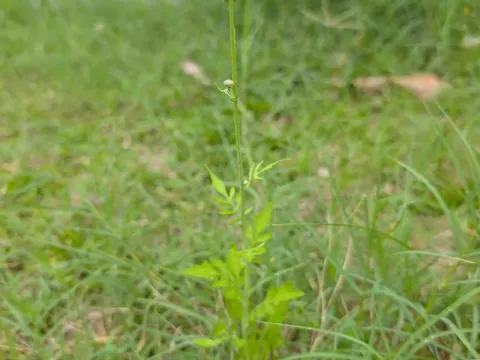
Hemistepta
Hemistepta
Hemistepta (scientific name: Hemistepta lyrata) is an annual or biennial herbaceous plant belonging to the Asteraceae family. Sowing is typically carried out in early spring when the soil temperature consistently reaches 10-12 degrees Celsius.
What the section contains

Hemistepta
The success of the crop depends on a well-prepared seedbed, which should be fine-textured and free from clods. Sowing depth is kept shallow, usually between 1 to 2 centimeters, to ensure rapid emergence of seedlings.
Seed spacing depends on the primary use of the plant; for foliage production, density is increased, while for seed production, wider row spacing is maintained to provide adequate space for development.
Good soil contact after sowing is essential, often achieved through light rolling, which improves moisture uptake and germination consistency across the field.
In regions with milder winters, some varieties allow for autumn sowing, but spring sowing is generally preferred for optimal vegetative development and weed management in the early stages.
Originating from East Asia, Hemistepta prefers temperate climates and is well-adapted to environments that offer stable moisture levels without extreme drought periods during the growing season.
The plant is highly photophilic, requiring full exposure to sunlight to maximize photosynthesis and accumulate the necessary secondary metabolites for its medicinal value.
Soil requirements focus on well-drained loams with a neutral or slightly acidic pH. Heavy clay soils that retain excess moisture can hinder root development and increase the risk of fungal infections.
Water management is critical during the initial growth phase. While the plant can tolerate moderate dry spells once established, consistent irrigation contributes to higher biomass yields.
Nutrient requirements should be met through balanced fertilization. Nitrogen application should be carefully timed to promote leaf growth without compromising the concentration of bioactive compounds in the harvestable material.
The primary economic output of Hemistepta is its green biomass, which is highly sought after in traditional pharmaceutical applications. Yield potential is optimized by maintaining ideal plant density and ensuring low weed competition.
The timing of harvest determines the final yield of quality compounds. Harvesting at the peak of the budding phase ensures the highest concentration of active ingredients, maximizing the plant's value.
Seed yield is heavily dependent on insect pollination. Managing the surrounding landscape to support bee populations can lead to significantly higher seed production efficiency.
Under intensive cultivation conditions, where nutrient and water inputs are strictly managed, multiple cuttings of foliage might be possible if the plant is managed to delay the flowering transition.
Overall, Hemistepta yields are reliable when farm management practices mitigate common field stresses such as moisture fluctuations and nutrient deficiencies during peak growth periods.
Fungal issues, such as powdery mildew, are the most common threats to Hemistepta, especially in environments with high humidity and poor ventilation within the crop canopy.
Root rot caused by excess water retention in the soil can be devastating. Proper drainage systems and crop rotation are essential practices to minimize the presence of soil-borne pathogens.
Pests like aphids and spider mites can infest the foliage, particularly in the upper parts of the plant. Integrated Pest Management (IPM) strategies, including biological controls, are recommended.
Weed infestation during the first few weeks of growth can severely stunt the plant, making early manual or mechanical weeding a mandatory part of the agronomic schedule.
Preventive measures include the removal of crop residues immediately after harvest to disrupt the lifecycle of pests and diseases that might otherwise survive in the field during the off-season.
Harvesting should be conducted during dry, clear weather. Moisture on the leaves during harvest significantly increases the risk of mold growth and quality loss during the drying stage.
The standard harvesting stage for foliage is just before the full bloom, when the plant reaches its maximum medicinal efficacy. Timing is the most critical factor for quality control.
Once harvested, the material must be dried efficiently. Controlled air drying in shaded, well-ventilated areas ensures the preservation of essential oils and other volatile compounds.
Seed harvesting occurs once the seed heads transition to a brownish color. Care must be taken to prevent shattering, which can result in significant field losses if the harvesting equipment is not tuned correctly.
- Material sorting
- Cleaning debris
- Drying to 12% moisture
- Packaging in breathable bags
- Storage in climate-controlled warehouses