
Helichrysum italicum
Helichrysum italicum (Roth) Gussone
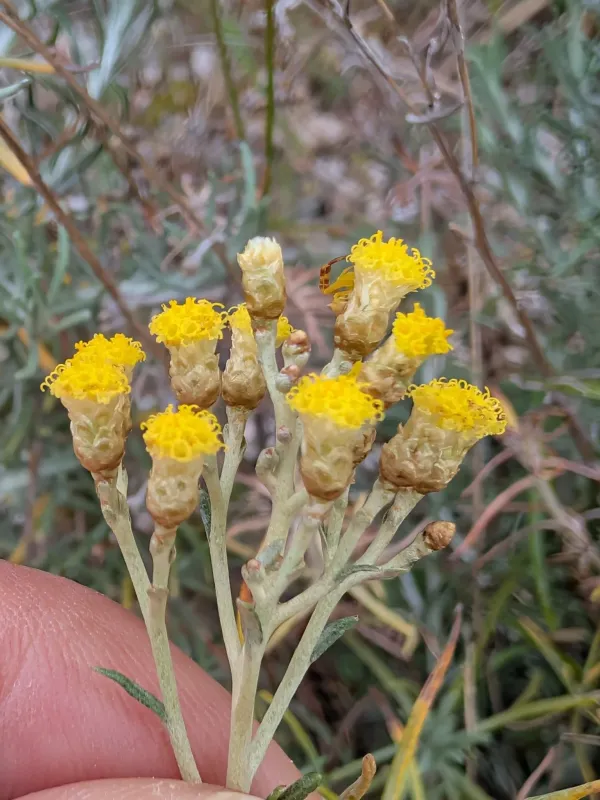
Description
Sowing dates
Sowing Helichrysum italicum is best achieved through greenhouse cultivation. In late winter or early spring, sow the fine seeds in a sterile, well-draining seed-starting mix, pressing them gently into the surface without covering them with soil.
Maintain a constant temperature of around 20°C and ensure high humidity using a plastic cover until germination occurs. Once the seedlings have reached a manageable size, transplant them into individual pots to strengthen their root systems.
Planting outdoors should occur only after the risk of frost has passed. Space the plants approximately 40 to 50 cm apart to ensure adequate airflow, which is critical for preventing fungal diseases in damp climates.
Vegetative propagation via cuttings is a common practice for maintaining genetic consistency. Semi-hardwood cuttings taken in late summer should be placed in a rooting medium and kept in a shaded, ventilated area until established.
Proper site preparation is essential. Choose a location with full sun exposure and sandy or loamy soil that mimics the plant's native Mediterranean environment, ensuring perfect drainage to avoid root stagnation.
Growing requirements
Helichrysum italicum belongs to the Asteraceae family and is highly adapted to arid conditions. It thrives in poor, rocky soils and requires minimal nutritional input compared to traditional crops.
The plant is extremely heliophilic, meaning it demands full sunlight for most of the day. Insufficient light results in weak, spindly growth and a significant reduction in the synthesis of valuable secondary metabolites.
Soil requirements focus primarily on drainage. The crop does not tolerate "wet feet" and will quickly succumb to root rot in waterlogged conditions. Adding gravel or sand to the planting bed is recommended for heavy soils.
As a xerophyte, it is highly drought-tolerant once established. Supplemental irrigation should only be provided during prolonged drought periods or immediately after transplanting to facilitate root development.
Climatic adaptability is moderate; the plant can survive light frosts but requires protective mulch or covering in regions where temperatures drop significantly below -10°C for extended periods.
Yield
The economic yield of an immortelle plantation typically matures by the second or third growing season. Commercial crops can produce between 3 to 6 tons of biomass per hectare under optimal management.
The production of essential oil is the primary goal for most farmers. The oil content in the biomass is typically low (0.1–0.4%), making the extraction process a refined and highly valued agricultural activity.
To maximize yields, maintain a balanced fertilization schedule focusing on potassium and phosphorus rather than nitrogen. High nitrogen levels stimulate excessive leaf growth, diluting the concentration of essential oils.
Strategic pruning after harvest is a vital technique to stimulate the development of new, high-oil-yielding shoots. Well-maintained plantations can remain productive for several years before needing renewal.
The quality of the final essential oil is strictly linked to the harvesting stage. Proper timing ensures that the chemical profile matches the standards required by the cosmetic and pharmaceutical industries.
Main diseases and pests
Root rot caused by Phytophthora species is the most significant threat to the crop. It is almost exclusively triggered by poor soil aeration and excessive rainfall or over-irrigation during the growing season.
Powdery mildew may occur in poorly ventilated areas with high humidity. Proper spacing and selecting sites with constant airflow are the most effective non-chemical ways to manage this fungal pathogen.
Pests such as aphids are generally not a major concern due to the potent aromatic oils present in the plant tissue, which act as a natural deterrent against many generalist insect species.
Weed competition is particularly challenging during the first few months of the plant's life. Effective mulch management with inorganic materials like gravel helps suppress weeds while reflecting light into the plant canopy.
Avoiding nitrogen-heavy fertilizers is crucial to prevent the plant from becoming too succulent, which makes it more susceptible to both pathogenic fungi and winter freeze damage.
Harvesting
Harvesting should be timed for the period of full bloom, usually in mid-summer, when the golden yellow flowers are fully expanded. This is when the volatile oil content is at its absolute peak.
Use sharp harvesting equipment to cut the top 15-20 cm of the flowering stems. Avoid collecting during damp mornings; it is best to harvest in the mid-day sun to ensure the plant material is dry.
Freshly cut material must be processed or dried immediately to prevent spontaneous fermentation, which can rapidly degrade the quality of the delicate essential oil components.
For high-quality results, drying should occur in a dark, climate-controlled space with temperatures kept under 40°C to preserve the integrity of the aromatic compounds.
Mechanical harvesting is feasible for large-scale operations. Modern equipment ensures a uniform cut and high efficiency, allowing for rapid throughput from the field to the distillation unit.