
Japanese eupatorium
Eupatorium japonicum Thunb.
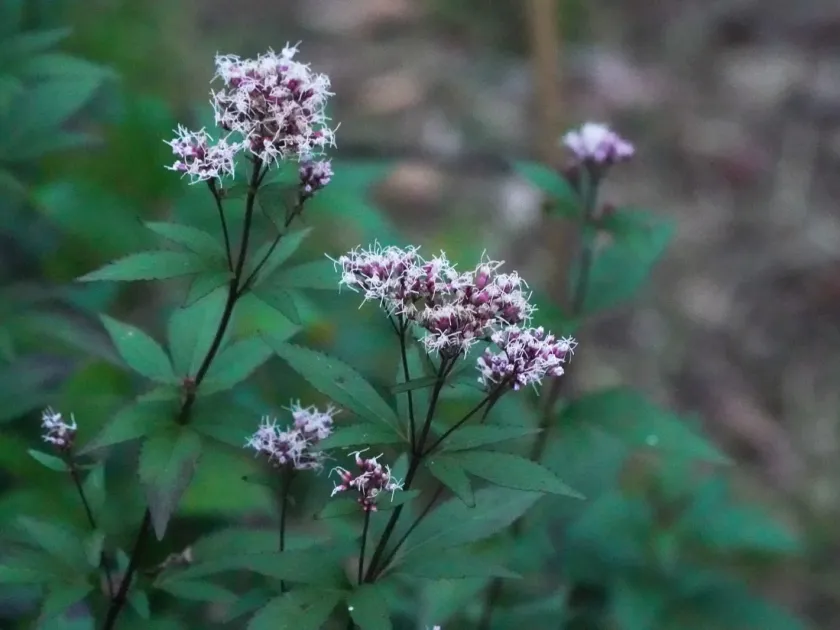
Description
Sowing dates
Sowing seeds of Eupatorium japonicum is typically performed in early spring, as soon as the soil warms up to 10-12 degrees Celsius. The seeds have high germination rates, although they require a one-month cold stratification period to enhance the germination energy.
For industrial cultivation, seeds are sown in a prepared substrate at a depth of no more than 0.5-1 cm. Surface sowing is essential as the seeds require light to germinate, which is a critical factor for this specific species.
Seedlings appear uniformly within two to three weeks, provided that the soil moisture is maintained at a constant level. It is recommended to transplant the seedlings during the two-true-leaf stage to facilitate the development of a robust root system before planting in the field.
Vegetative propagation via rhizome division is also possible, performed either in early spring or late summer. This method allows for faster production of commercial biomass and ensures the preservation of the plant's varietal characteristics.
Planting density is calculated based on the intended use of the crop, typically ranging from 4 to 6 plants per square meter of land.
Growing requirements
Japanese eupatorium is a perennial herbaceous plant belonging to the Asteraceae family, native to East Asia, including Japan, Korea, and China. The crop prefers well-lit areas but can tolerate partial shading during the hottest hours of the day.
For successful growth, fertile and humus-rich soils with a neutral or slightly acidic reaction are required. A high level of soil moisture is an important condition, as the plant is extremely sensitive to prolonged drought periods.
The crop responds well to regular watering, especially during the active stem development and budding phases. Water stagnation is less detrimental to the plant than drying out, so loamy soils with good water-holding capacity are preferred.
In temperate climate conditions, Eupatorium japonicum demonstrates high winter hardiness. The above-ground parts die off annually with the arrival of the first heavy frosts, but the rhizome successfully overwinters without the need for additional protection.
Agrotechnology also includes periodic application of mineral fertilizers, rich in nitrogen at the beginning of the season for leaf mass production, and potassium-phosphorus compositions during the floral bud formation period.
Main diseases and pests
The plant possesses high natural immunity, but under conditions of high humidity and dense planting, it can be affected by powdery mildew. Prevention involves maintaining optimal spacing between plants and ensuring good air circulation in the field.
Among pests, leaf-eating insects and aphids pose the greatest danger, as they can significantly reduce the market quality of the raw material. Biological insecticides or soap-ash solutions are applied at the beginning of the vegetative phase for control.
Nematodes may damage the root system when the crop is grown on the same plot for many years. Strict crop rotation and the use of healthy planting material are recommended to prevent the spread of these pests.
Fungal leaf spots can appear during sharp temperature fluctuations in late summer. Removing infected plant residues in the autumn is a mandatory measure to minimize the infection pressure for the following season.
In general, Eupatorium japonicum is considered a quite resilient crop requiring minimal chemical treatments, making it a promising candidate for organic farming practices.