
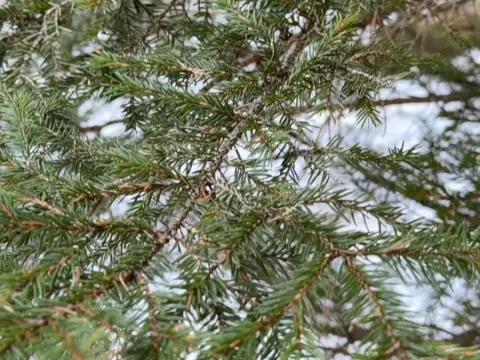
Norway spruce
Picea abies (L.) H. Karst.
Norway spruce (Picea abies) is a major member of the Pinaceae family. Propagation is primarily achieved through seeds, which are sown in nurseries during the spring when soil temperatures reach 5–8 degrees Celsius.
What the section contains
Norway spruce
Seeds often undergo a stratification process to break dormancy and ensure uniform germination rates. In professional nursery settings, they are sown into well-drained substrates rich in peat to promote healthy root development.
Young seedlings are highly sensitive to sunlight and moisture levels. They require shade during their first year and consistent watering to prevent desiccation, which is the primary cause of seedling mortality.
Vegetative propagation via cuttings is mainly used for cultivars in ornamental horticulture. This method requires specialized rooting hormones and greenhouse climate control to ensure success rates are economically viable.
Planting density in forest management ranges between 3,000 to 5,000 saplings per hectare, depending on the site's productivity and the intended timber harvest age.
The Norway spruce is a shade-tolerant species, although it thrives best in conditions with ample diffused light. It has a high requirement for atmospheric and soil moisture, making it unsuitable for dry or arid climates without irrigation.
Optimal growth occurs in fresh, nutrient-rich loamy or sandy loam soils. It is critical that the site has good drainage, as the species is highly susceptible to root rot in stagnant water conditions.
While the tree is highly frost-hardy, late spring frosts can be detrimental to the new, tender shoots. Protection in the early stages of the growing season is essential for maintaining the tree's health and symmetry.
Mulching the root zone is a recommended agronomic practice to stabilize soil temperature and retain moisture. However, the spruce is quite sensitive to air pollution, particularly sulfur dioxide, which limits its use in industrial landscapes.
Soil pH should ideally remain between 4.5 and 6.0. If the soil is too alkaline, needle yellowing and stunted growth are common physiological symptoms that require soil amendment.
Norway spruce is one of the most economically significant timber species in Europe. Its productivity is measured in standing volume, which can reach 600 cubic meters per hectare in managed, mature stands.
The production cycle typically lasts from 60 to 100 years, depending on the objective. Young stands are often harvested at ages 8–12 for the Christmas tree market, a significant niche in the agricultural sector.
The timber is highly valued in the construction, pulp and paper, and furniture industries. Its high strength-to-weight ratio also makes it a preferred material for high-quality musical instruments.
By-products of spruce production include essential oils, resins, and tannins. These are harvested and utilized in the pharmaceutical, cosmetic, and leather tanning industries, adding value to the forestry business.
The species also provides significant ecosystem services, including carbon sequestration and air purification through the emission of volatile organic compounds known as phytoncides.
Needle cast diseases, such as Rhizosphaera or Lophodermium, are common in spruce stands with poor airflow and high humidity. These infections lead to premature needle drop and weakened trees.
Root rot, particularly caused by Heterobasidion annosum, is a critical threat that weakens the root system and makes trees susceptible to windthrow. Preventive silviculture, such as removing infected stumps, is the primary management strategy.
The European spruce bark beetle (Ips typographus) is the most destructive pest. Outbreaks can devastate entire forests, especially when trees are already stressed by drought or storm damage.
Adelgids and aphids are common pests that cause gall formation and needle yellowing. While rarely fatal to mature trees, they can severely stunt growth and reduce the marketability of young decorative trees.
Effective management requires a combination of regular monitoring, sanitary harvesting of infested trees, and maintaining optimal stand density to ensure the trees have sufficient resources to remain resilient.