
Red spruce
Picea rubens Sarg.
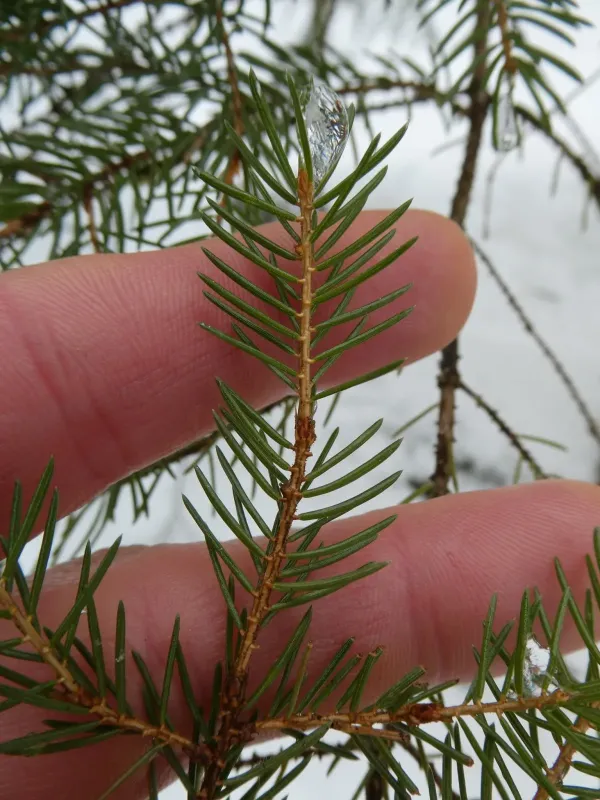
Description
Sowing dates
Red spruce is a species primarily propagated through seed in forest nursery settings to ensure consistent plantation stock.
Seeds require a period of cold stratification, lasting between one and two months, to break dormancy and maximize germination rates.
In modern silviculture, container-grown seedlings are preferred to promote superior root development and higher survival rates upon outplanting.
Sowing should take place in early spring into well-drained, acidic soil media that mimics the tree's natural forest floor environment.
Young seedlings must be protected from direct intense sunlight and desiccating winds during their first growing season to ensure establishment.
Growing requirements
Belonging to the Pinaceae family, the Red spruce thrives in cool, moist, and temperate climates typical of the Appalachian Mountains region.
This species requires consistently moist but well-drained soils and is highly intolerant of drought or prolonged waterlogged conditions.
It performs best in high-altitude environments where humidity is high and atmospheric pollutants are minimal, as it is sensitive to air quality.
The root system is relatively shallow, necessitating planting in locations protected from high winds to prevent potential windfall damage.
While tolerant of moderate shade, optimal growth and biomass accumulation occur when the species receives sufficient access to filtered sunlight.
Main diseases and pests
The most significant biotic threat to Red spruce populations is the spruce bark beetle, which can devastate stressed forest stands.
Fungal pathogens such as needle casts and root rot often plague stands that are weakened by soil compaction or environmental stress factors.
Acid deposition and climate-induced warming trends significantly weaken the resilience of this species, making it more susceptible to various pests.
Wildlife grazing, particularly by white-tailed deer, can cause physical damage to young saplings, leading to stunted or deformed tree growth.
Management strategies involve rigorous monitoring and silvicultural practices that maintain stand vigor and reduce the spread of fungal diseases.
Harvesting
Red spruce timber is highly valued in the lumber industry for its excellent strength-to-weight ratio and acoustic resonance qualities.
It is a primary raw material for the pulp and paper industry, contributing significantly to regional forest economies in North America.
The wood is frequently utilized in the construction of musical instruments, particularly soundboards for guitars and violins, due to its structure.
Harvesting operations typically utilize sustainable selection cutting or shelterwood systems to promote natural regeneration of the forest stand.
Post-harvest management involves careful residue removal and soil protection to ensure the site remains productive for future rotations.